Wildlife Biology
Learn in the classroom, the lab, and the field. A Bachelor of Science in Wildlife Biology prepares you to protect, manage, preserve, and improve the environments animals, plants, and aquatic species call home.
Social:
As a wildlife biology major, you’ll study subjects like forest ecology, animal-plant interactions, herpetology, mammalogy, biology of fishes, conservation biology, animal behavior, and wildlife ecology and management.
- More than 100 hours in the field as part of your coursework
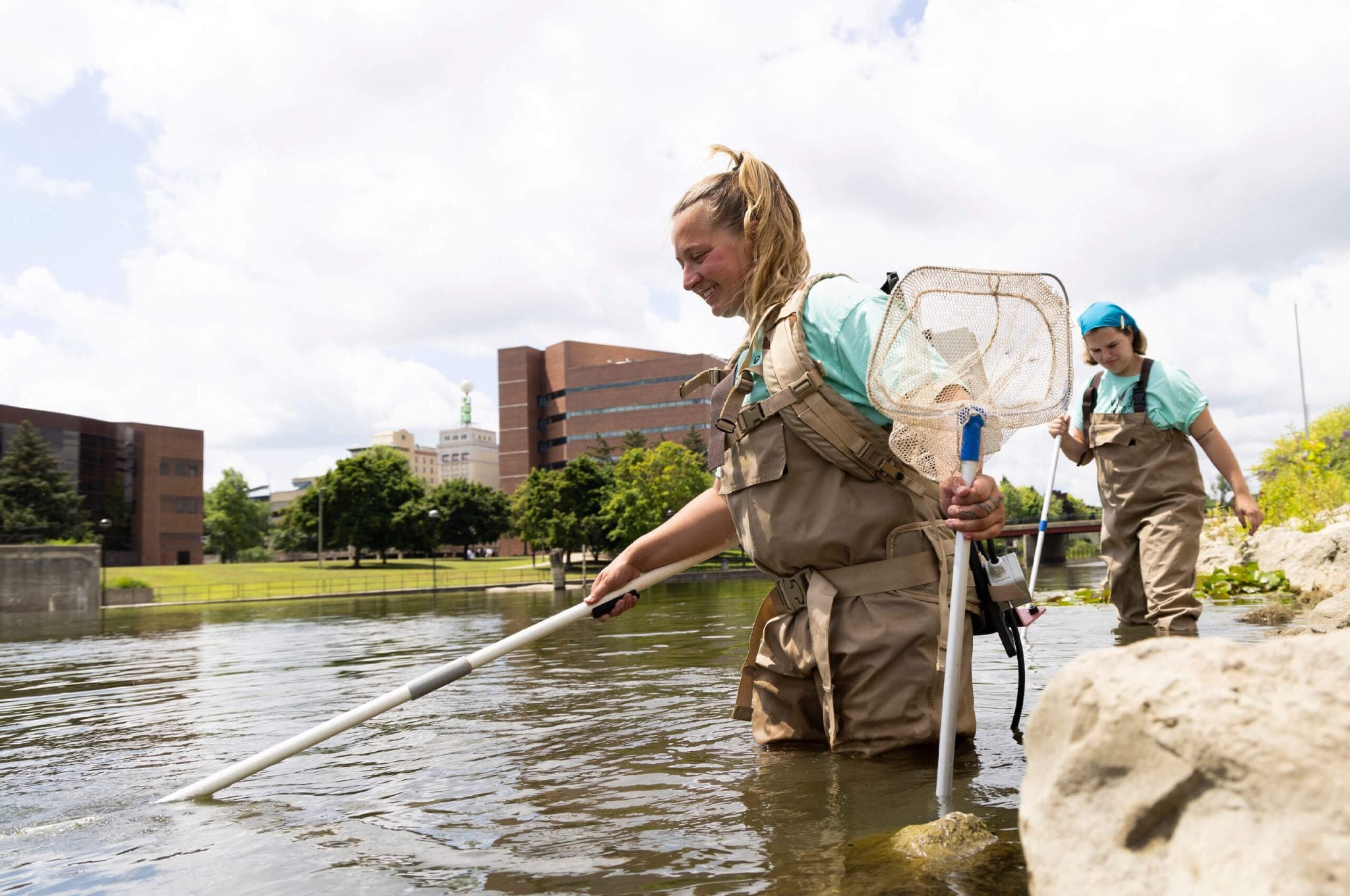
- Expert training in electrofishing, orienteering, tagging and tracking animals, and other techniques employers require
- Great preparation for graduate school or a career as a veterinarian
Field Partnerships
Benefit from collaborations with partners across Michigan, including the University of Michigan Biological Station, the Department of Natural Resources, and the Flint River Watershed Coalition.
ON THIS PAGE
Why earn this degree here?
100+ Hours in the Field
Get hands-on training in electrofishing, orienteering, tagging and tracking animals, and other techniques employers require, right in the field.
Clubs & Community
Meet and work with students who share your interests in the Wildlife Biology and Pre-Veterinary clubs.
Undergraduate Research
Conduct state-of-the-art research alongside expert faculty through the Undergraduate Research Opportunity Program.
Free Tuition with the Go Blue Guarantee!
UM-Flint students are automatically considered, upon admission, for the Go Blue Guarantee, a historic program offering free tuition for high-achieving, in-state undergraduates from lower-income households. Learn more about the Go Blue Guarantee to see if you qualify and how affordable a Michigan degree can be.

Curriculum Overview
All students in the Bachelor of Science in Wildlife Biology curriculum fulfill general education requirements and take eight core wildlife biology courses, four non-biological natural sciences courses, and single courses in physics and math. Then they follow one of three concentrations based on career interest:
General Wildlife Biology
Prepares students for entry-level jobs or graduate training.
Associate Wildlife Biologist
Meets the educational requirements for certification as an Associate Wildlife Biologist by The Wildlife Society.
Pre-Veterinary
For students who plan to attend veterinary school.
Students who wish to continue their studies can pursue UM-Flint’s Master of Science in Biology.
Career Outlook
Many career paths are available to wildlife biology graduates. Consider these examples from the U.S. Bureau of Labor Statistics:
Zoologists and Wildlife Biologists
2%
Job growth through 2030 slightly below average
1,700
Job openings annually through 2030
$64,650
Median annual salary
Environmental Scientists and Specialists
8%
Job growth through 2030
$80,060
Median annual salary
Veterinarians
17%
Job growth through 2030
4,400
Job openings annually through 2030
$100,370
Median annual salary
Scholarships for Wildlife Biology Majors
In addition to being eligible for financial assistance through the Office of Financial Aid, you can apply for UM-Flint scholarships specifically for biology students, including:
- Fleming A. and Marian E. Barbour Scholarship Fund
- Emmalyn Ellis Freeman Master of Science in Biology Scholarship
- Zelpha E. McKinnon Science Scholarship
- Gary Pace Biology/Ecology Field Study Scholarship
- John Terrill and Lora Dorland Biological Sciences Scholarship Fund
Admission Requirements
Wildlife biology majors follow UM-Flint’s standard first-year or transfer admission requirements — there are no additional program-specific requirements to declare this major.
To help ensure your success at UM-Flint, it’s important to develop a strong relationship with your academic advisor, who can explain program requirements, help you select courses, and discuss post-graduation options. If you’re considering majoring in wildlife biology, consult the program’s academic advisor before registering for your first-semester classes.
Academic Advisor