Bachelor of Science in Computer Science
Learn high-demand technical skills required by businesses, educational institutions, nonprofits, and government agencies — where the median salary is around $100,000 annually.
Social:
Our graduates become software developers, database administrators, systems administrators, usability engineers, data scientists, IT project managers, and more. The program focuses primarily on software and software systems, spanning from the theoretical to the practical.
- Learn software development, engineering, computer networking, and information security
- Smaller classes with more personal attention from faculty who specialize in advanced topics
- Customize your program with advanced electives
Hands-On Programming
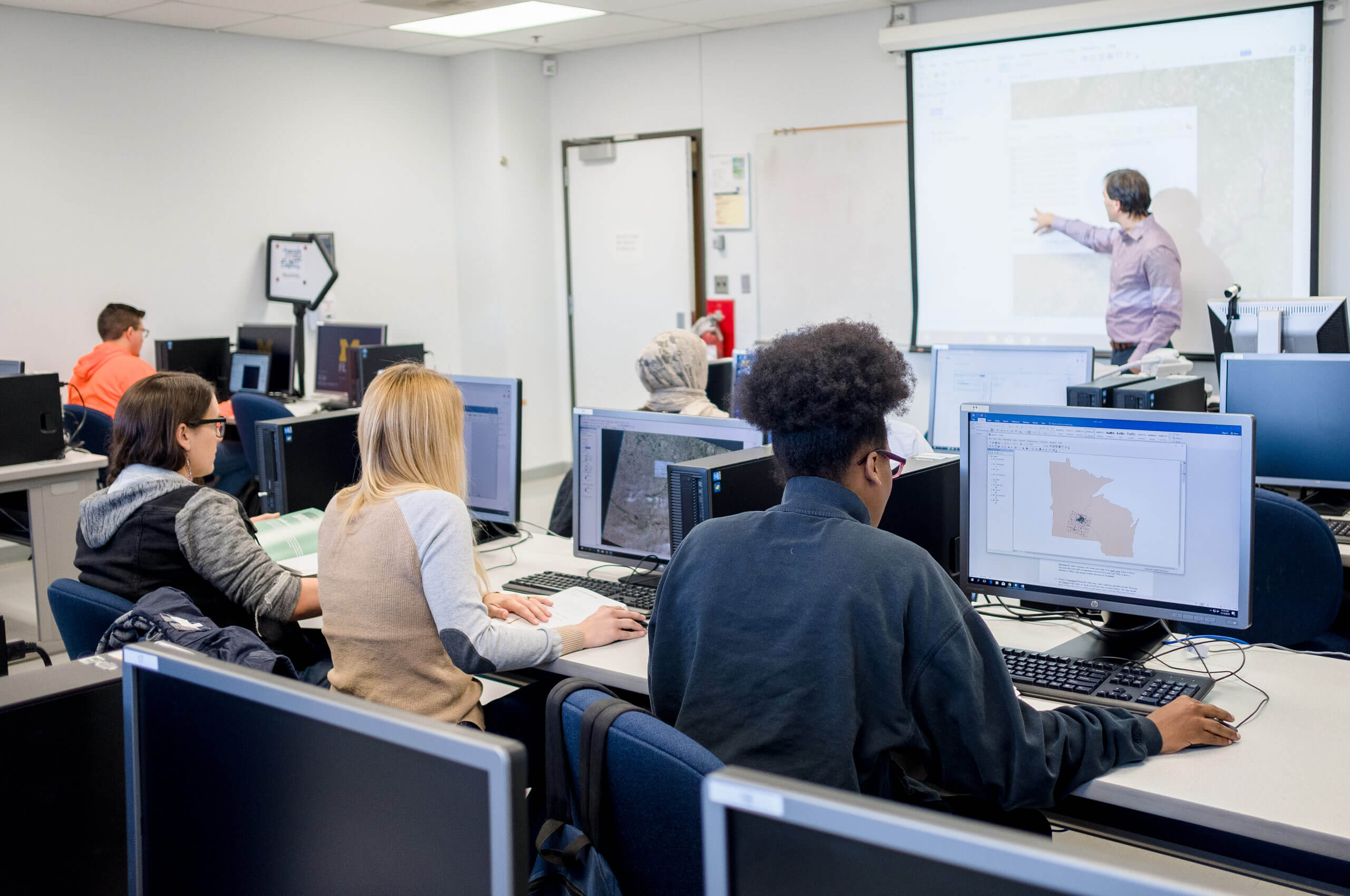
Train in programming languages such as Java, JavaScript, C++, and SQL through hands-on projects that build a portfolio employers want to see.
ON THIS PAGE
Why earn this degree here?
Clubs & Community
Meet and learn with students who share your interests in active IEEE and ACM student chapters, an e-sports club, a game design club, and the Upsilon Pi Epsilon honor society.
BS/MS Joint Degree
Earn your master’s degree with just 21 additional credit hours through the Computer Science and Information Systems BS/MS Joint Degree program.
Undergraduate Research
Conduct paid or volunteer research with faculty on cutting-edge projects through the Undergraduate Research Opportunity Program.
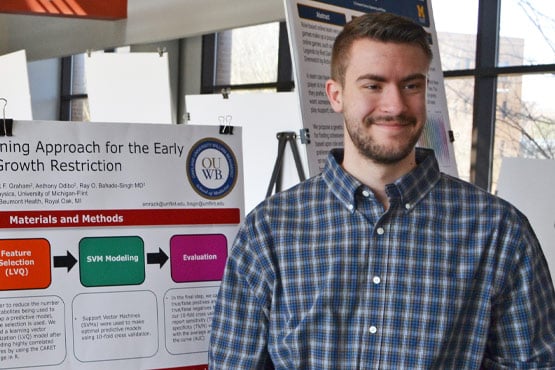
Andrew conducted AI and machine learning research with Dr. Halil Bisgin, studying the biomarkers of disease. He says: “This experience meant a lot to me in terms of getting a sense of how real-world computer science skills are used. I saw this as a great opportunity to build my resume as well. I’m extremely happy our research was published and am hoping it will help to advance my career.”
Andrew Mrazik
Computer Science, 2020
Senior Implementation Analyst, Novasyte LLC
Free Tuition with the Go Blue Guarantee!
UM-Flint students are automatically considered, upon admission, for the Go Blue Guarantee, a historic program offering free tuition for high-achieving, in-state undergraduates from lower-income households. Learn more about the Go Blue Guarantee to see if you qualify and how affordable a Michigan degree can be.

Curriculum Overview
The Bachelor of Science in Computer Science curriculum (with an honors version available) can be paired with the Computer Science and Information Systems BS/MS Joint Degree program. Four minors are available: Computer Information Systems, Computer Science, Game Development, and Health Information Systems. Graduate options include the Master of Science in Computer Science & Information Systems (completed entirely online, on campus, or a combination), an MBA/MS dual degree, and master’s programs in Data Analytics, Data Science, and Cybersecurity.
Career Outlook
Demand for workers in computer and information technology occupations will remain strong, with employment projected to grow 13 percent through 2030 — faster than the 7.7 percent average for all jobs. The median annual salary for these workers is $97,430. Consider these job projections from the U.S. Bureau of Labor Statistics:
Information Security Analysts
33%
Job growth through 2030
16,300
Job openings annually through 2030
$102,600
Median annual salary
Software Developers, QA Analysts, and Testers
22%
Job growth through 2030
189,200
Job openings annually through 2030
$110,140
Median annual salary
Computer Network Architects
5%
Job growth through 2030
11,000
Job openings annually through 2030
$120,520
Median annual salary
Other strong options include computer systems analysts ($99,270 median salary), database administrators and architects ($98,860 median salary), and network and computer systems administrators ($80,600 median salary). More information is available from the U.S. Bureau of Labor Statistics.
Scholarships for CS Majors
Besides being eligible for financial assistance through the Office of Financial Aid, you can apply for UM-Flint scholarships specifically for computer science and computer information systems majors, including:
- Ralph M. and Emmalyn E. Freeman Computer Science, Engineering, and Physics Scholarship
- Susan G. Helser Computer Science Scholarship Fund
- G. Radhabai and A.V. Rajagopal Scholarship
Admission Requirements
Computer science majors follow UM-Flint’s standard first-year or transfer admission requirements — there are no additional program-specific requirements to declare this major.
With so many options and opportunities, staying on top of everything can be hard — that’s where academic advisors help. They can ensure you’re fulfilling program requirements, help you choose classes, and point you toward opportunities you might have missed.
Have questions? Contact the program’s dedicated academic advisor.
Academic Advisor