Cellular and Molecular Biology
Get hands-on lab and research experience. Cellular and molecular biology have revolutionized medicine and the natural sciences, leading to remarkable advances in disease treatment, drug development, forensics, and the study of evolution.
Social:
When you graduate with a Bachelor of Science in Cellular and Molecular Biology, you’ll be prepared for:
- A career straight out of college with pharmaceutical companies, biotech firms, genetic counseling programs, and more
- Graduate studies with a 100 percent success rate applying to PhD programs at institutions like Cal-Berkeley, Cornell, Johns Hopkins, Northwestern, and Yale
- Professional health care training, with a 96 percent success rate in medical school admissions
Marketable Lab Techniques
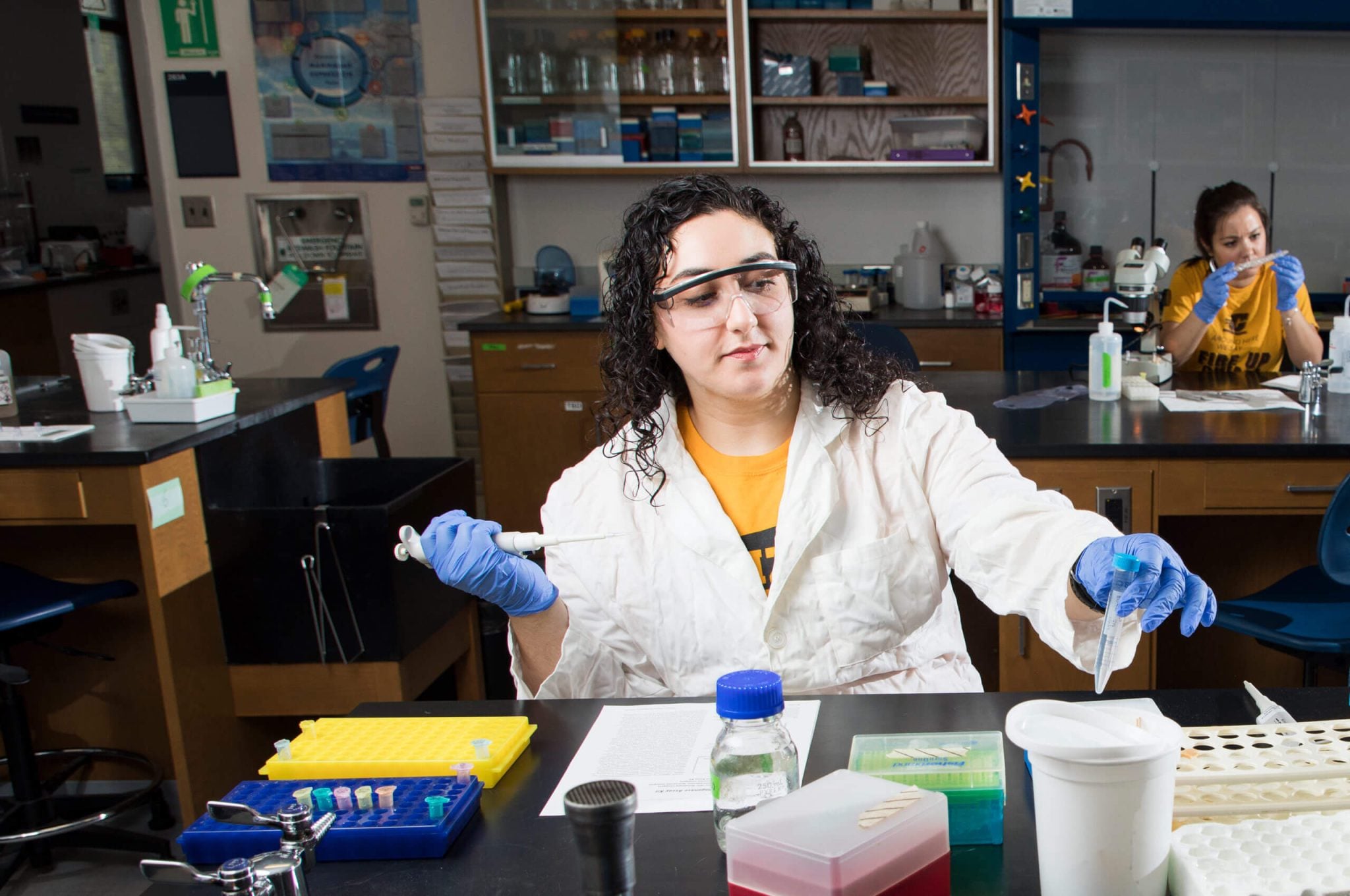
Our innovative coursework includes intensive laboratory work, giving you hands-on experience with mammalian cell culture, recombinant DNA, PCR, and more.
ON THIS PAGE
Why earn this degree here?
Molecular Biology Club
Attend research conferences, host presentations by faculty and alumni, fundraise for causes like Relay for Life, and volunteer at events like Super Science Friday.
Expert Faculty
Our professors encourage questions and get to know you individually, helping you build the confidence that contributes to your success as a student.
Undergraduate Research
Conduct state-of-the-art research alongside expert faculty through the Undergraduate Research Opportunity Program.
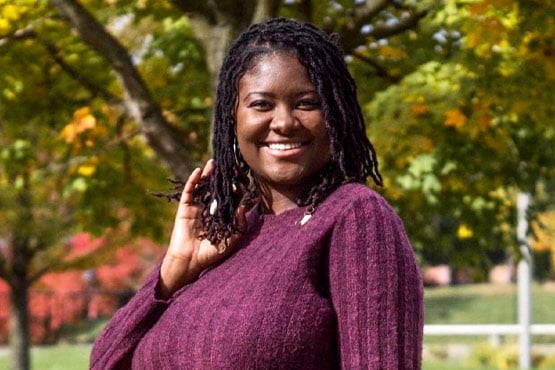
Georgina collaborated with faculty on important research projects — she and Dr. Sucic studied the ability of older adults to recover from exercise. The experience led her to enroll with the MSU College of Human Medicine for medical school. She says: “I think a lot of college students can be afraid to talk to their professors… they don’t want to feel dumb for asking a question. I really liked that my professors encouraged me whenever I asked questions. I think that really contributed to my success as a student.”
Georgina Brown
Molecular Biology & Biotechnology, 2020
Free Tuition with the Go Blue Guarantee!
UM-Flint students are automatically considered, upon admission, for the Go Blue Guarantee, a historic program offering free tuition for high-achieving, in-state undergraduates from lower-income households. Learn more about the Go Blue Guarantee to see if you qualify and how affordable a Michigan degree can be.

Curriculum Overview
All students in the Bachelor of Science in Cellular and Molecular Biology curriculum take ten biology courses, nine chemistry courses, two physics courses, and a math course. Then they follow one of seven concentrations based on career interest: Pre-Dental, Pre-Medical, Pre-Veterinary, Research, Pre-Occupational Therapy, Pre-Physical Therapy, and Pre-Physician Assistant. It’s strongly recommended that students add a minor or a second major in a different discipline — you can’t major in more than one biology program, nor major and minor in biology. Students who wish to continue their studies can pursue UM-Flint’s Master of Science in Biology or the professional healthcare programs mentioned above.
Career Outlook
Many majors pursue careers in health care or scientific research, usually after additional professional education. Consider these job projections for just a few possibilities from the U.S. Bureau of Labor Statistics:
Physician Assistants
31%
Job growth through 2030
12,200
Job openings annually through 2030
$115,390
Median annual salary
Biochemists and Biophysicists
Steady demand for research roles
3,200
Job openings annually through 2030
$102,270
Median annual salary
Physicians and Surgeons
3%
Job growth through 2030
22,700
Job openings annually through 2030
$208,000+
Median annual salary
Other options include biological technicians ($48,140 median salary), microbiologists ($79,260 median salary), and physical therapists ($91,010 median salary). More information about careers is available from the U.S. Bureau of Labor Statistics.
Scholarships for Biology Majors
In addition to being eligible for financial assistance through the Office of Financial Aid, you can apply for UM-Flint scholarships specifically for biology students, including:
- Fleming A. and Marian E. Barbour Scholarship Fund
- Emmalyn Ellis Freeman Master of Science in Biology Scholarship
- Zelpha E. McKinnon Science Scholarship
- Gary Pace Biology/Ecology Field Study Scholarship
- Holly Sucic Endowed Memorial Scholarship
- John Terrill and Lora Dorland Biological Sciences Scholarship Fund
Admission Requirements
Cellular and Molecular Biology majors follow UM-Flint’s standard first-year or transfer admission requirements — there are no additional program-specific requirements to declare this major.
To help you stay on track toward a degree, it’s important to develop a strong relationship with your academic advisor, who can clarify program requirements, help you select courses, and discuss the benefits of different concentrations. If you’re considering majoring in Cellular and Molecular Biology, consult with the program’s advisor before registering for your first-semester classes.
Academic Advisor
Have questions? Contact the program’s dedicated academic advisor.