History
The University of Michigan-Flint’s story is one of vision, generosity, and partnership with the city of Flint. Trace the milestones that have defined our campus from 1956 to today.
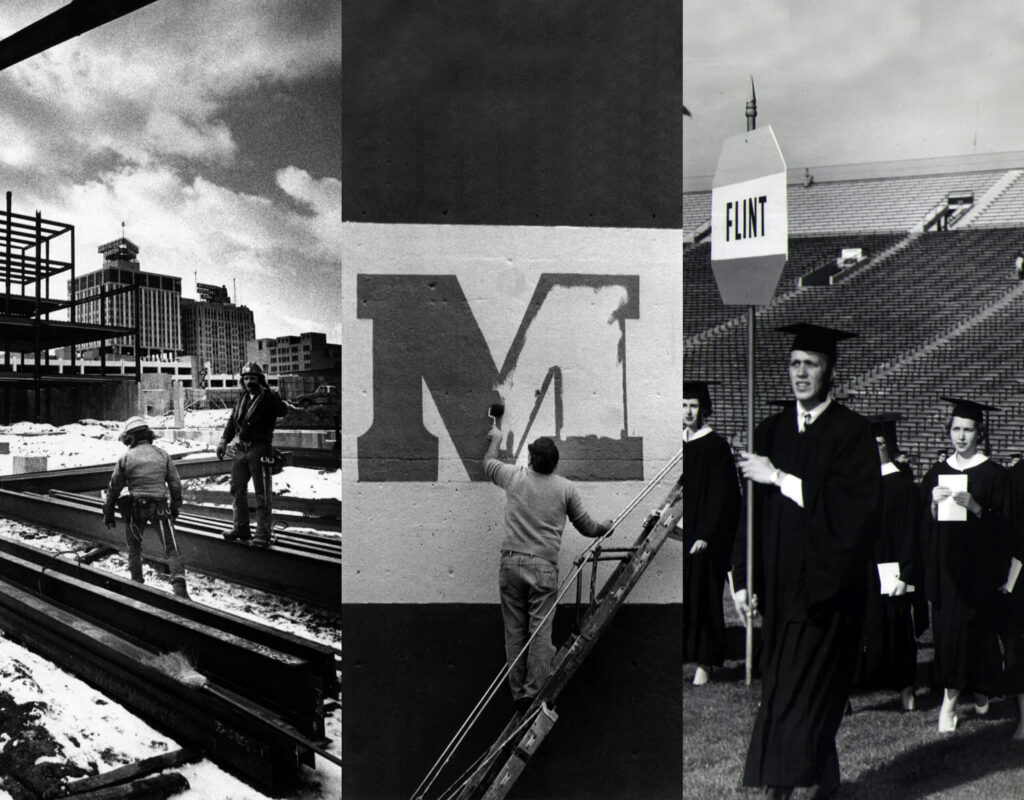
A Legacy Still in Motion
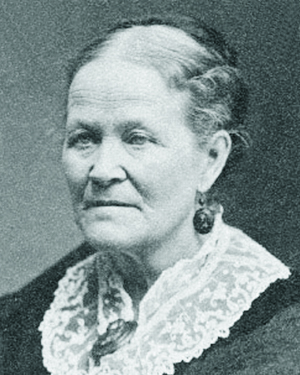
In an 1837 letter to family back east, Ann Arbor resident Sarah C. Miles Case made a remarkable prediction: “A branch of the Michigan University at Ann Arbor is to be established in Flint at some future day.”
It would take nearly 120 years for that vision to become reality.
A Vision Takes Root
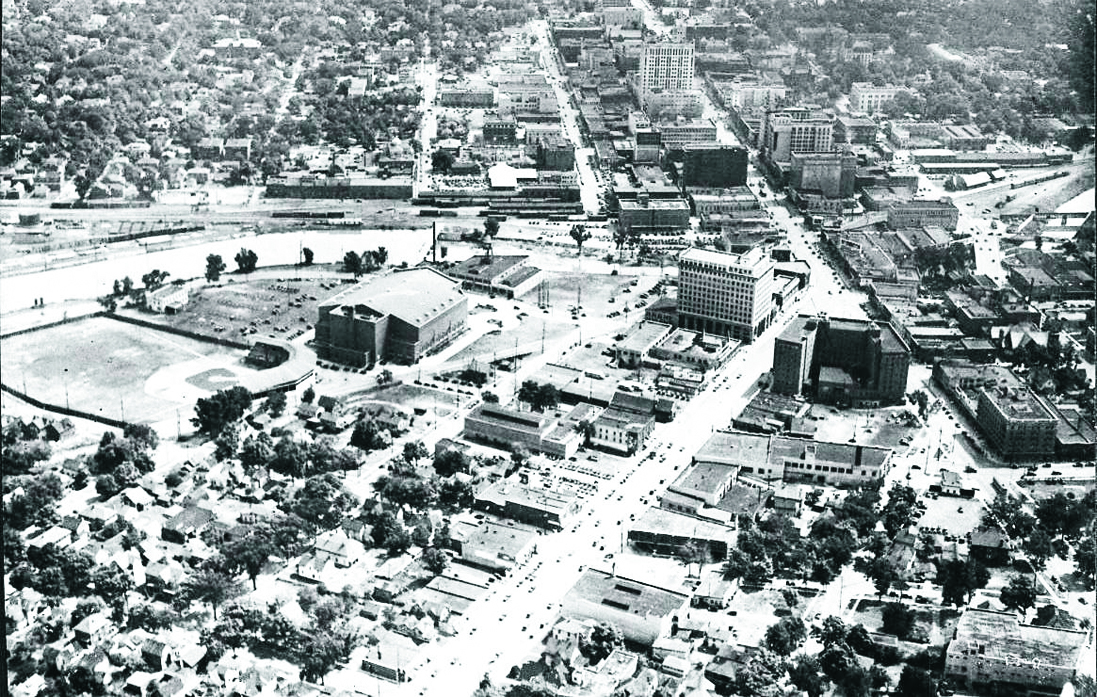
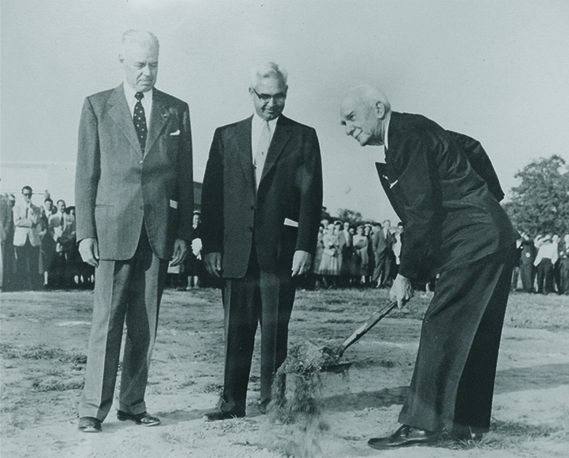
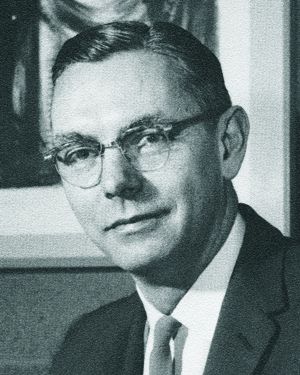
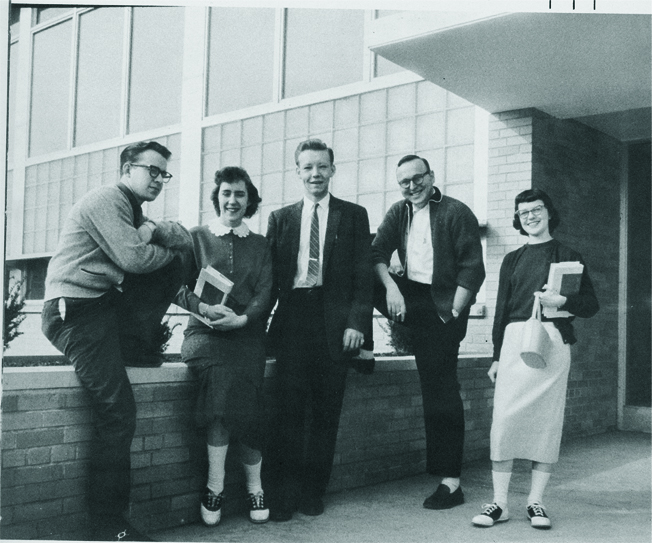
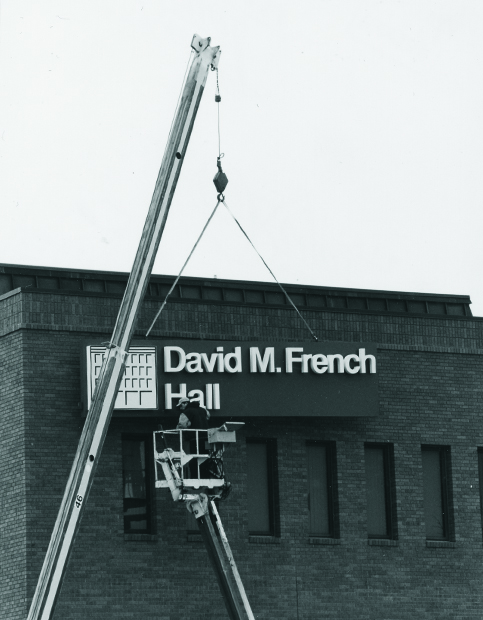
On Sept. 23, 1956, 167 students walked through the doors of Flint Senior College for their first day of classes. Led by founding dean David French, the young institution occupied space on what is now the campus of Mott Community College, but its mission was already clear: provide the people of Flint and the surrounding region access to a world-class University of Michigan education close to home.
What began with one building and one class of students quickly grew through the vision of community leaders, philanthropists and university officials who believed higher education could transform both lives and a city. The generosity of Charles Stewart Mott, the leadership of Governor George Romney, and the partnership between Flint and the University of Michigan helped lay the foundation for what would become one of the university’s three campuses.
The institution continued to evolve alongside the community it serves. Accredited by the North Central Association of Colleges and Schools in 1970, the campus officially became the University of Michigan-Flint the following year, when the Board of Regents adopted its current name and University of Michigan President Robben Fleming appointed William Moran as the university’s first chancellor.
The Beginning
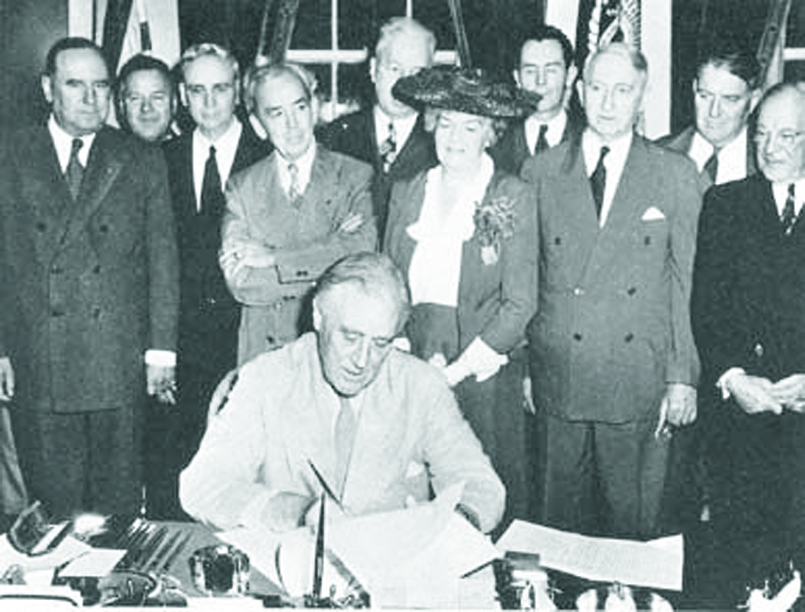
In 1837, Ann Arbor resident Sarah C. Miles Case predicted a University of Michigan branch would come to Flint. It would take more than a century — and the return of GIs from World War II — to make that vision real.
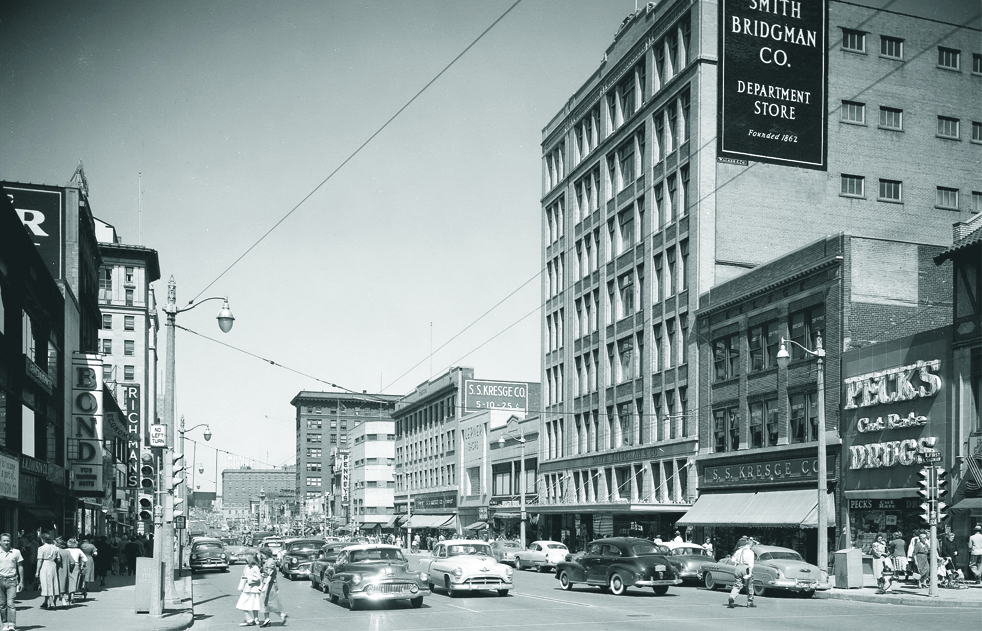
Also in these founding years:
- May 1944 – Flint Board of Education requests that a University of Michigan extension office open in Flint.
- February 1947 – Regents approve a higher education needs assessment for Flint.
- 1949 – U-M Social Science professors Arthur E. Lean and Franklin Killian complete the assessment and recommend a liberal arts college for Flint.
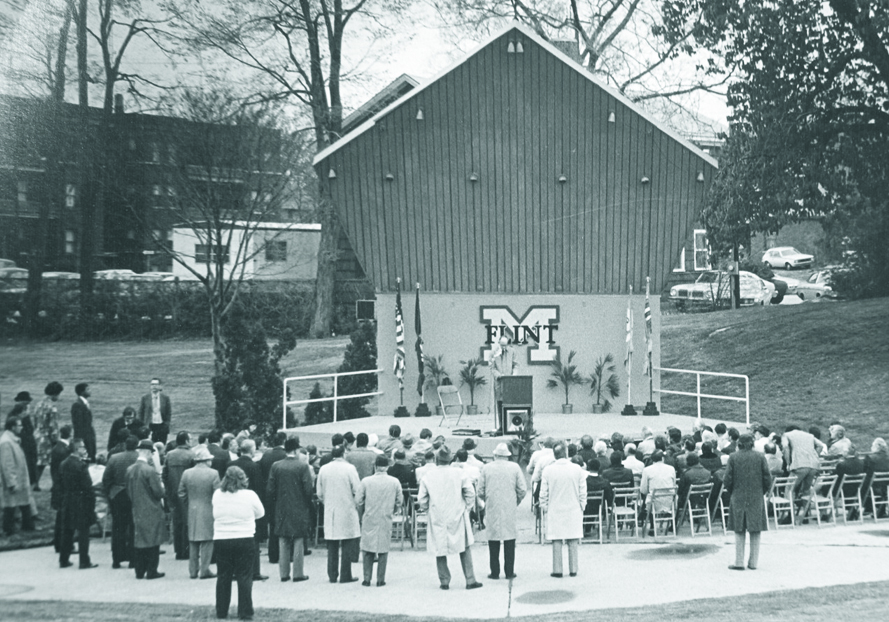
In 1970, the North Central Association of Colleges and Schools accredited what was then called Flint College. In 1971, the U-M Board of Regents officially changed the institution’s name to the University of Michigan-Flint. That same year, University of Michigan President Robben Fleming appointed William E. Moran as the first Chancellor of the University of Michigan-Flint.
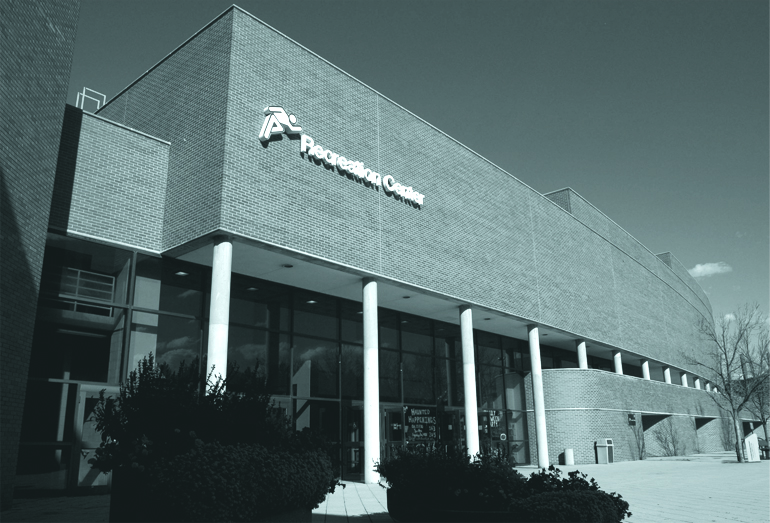
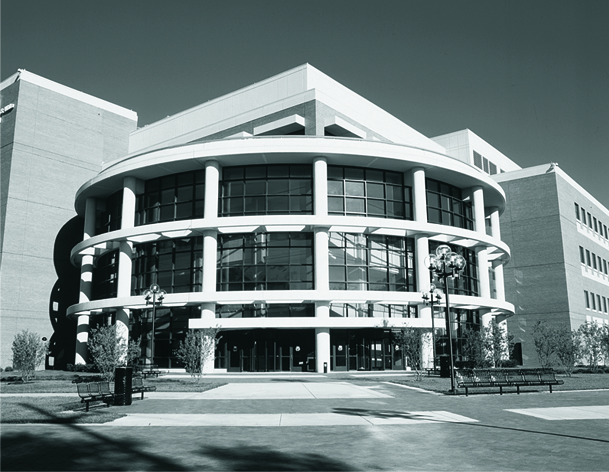
In the late 1970s, the university began moving to a property in the heart of downtown Flint, building a riverfront campus with a small collection of buildings including the Classroom Office Building, (affectionately known as CROB to UM-Flint Alumni), the Harding Mott University Center, and the Recreation Center. As student enrollment grew, the Murchie Science Building opened in 1988, and in 2021 a new wing for expanded STEM courses opened. A gift from benefactor Frances Willson Thompson led to the building of the striking Thompson Library in 1994. In 2001, UM-Flint expanded north for the first time with the opening of the William S. White Building which houses health classrooms and labs. Today, the modern and inviting campus spans over 70 acres along the Flint River.
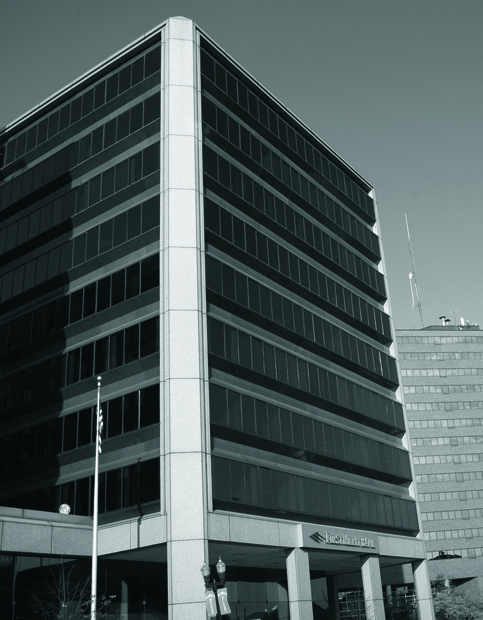
As a community partner, over time, the university has acquired existing buildings throughout the downtown area and turned them into viable parts of the campus. These spaces include the University Pavilion (pictured on the left), the Northbank Center, The Riverfront Center, and most recently the former Citizens Bank Building.
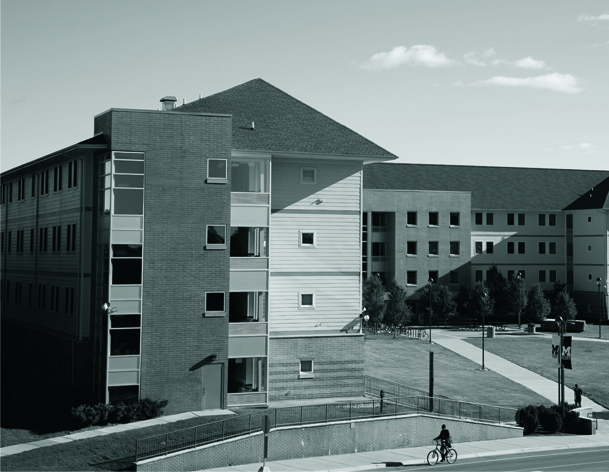
In 2006, UM-Flint celebrated 50 Years of Excellence. The university finally became a residential campus in 2008 when 300 students moved into the First Street Residence Hall, and added a second residence hall with the addition of the Riverfront Residence Hall in 2015. That building is also home to the newly renovated Riverfront Conference Center, which is Genesee County’s largest conference venue and hosts thousands of visitors each year.
Today, five major academic units, consisting of the College of Arts & Sciences, the School of Management, the College of Health Sciences, the School of Nursing, and the new College of Innovation & Technology, offer compelling, in-demand programs that prepare students for their futures.
A Campus Takes Shape
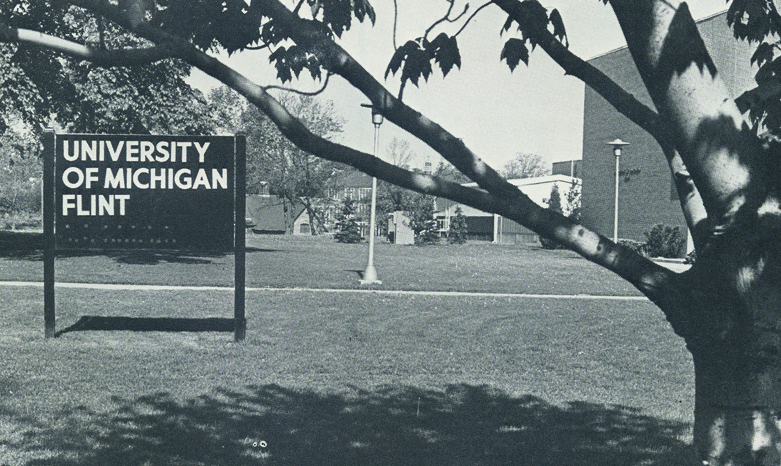
The late 1970s marked another defining chapter as UM-Flint established its permanent home along the Flint River, helping reshape downtown into a center of education, culture and opportunity. What began with the Classroom Office Building, Harding Mott University Center and Recreation Center steadily expanded as the campus and its academic programs grew together.. The Murchie Science Building opened in 1988 and received a major STEM expansion in 2021. The Thompson Library, made possible through the generosity of Frances Willson Thompson, became an architectural centerpiece in 1994. Health sciences programs found a home in the William S. White Building in 2001, while additional facilities, including the University Pavilion, Northbank Center and Riverfront Conference Center, strengthened the university’s presence throughout downtown Flint.
The campus itself continued to evolve to meet students’ changing needs, becoming a residential campus in 2008 with the opening of First Street Residence Hall. Today, the Riverfront Conference Center welcomes thousands of visitors each year, further connecting the university with the city it calls home.
The 1950s
The birth of Eisenhower’s America, rock ‘n’ roll, and UM-Flint.
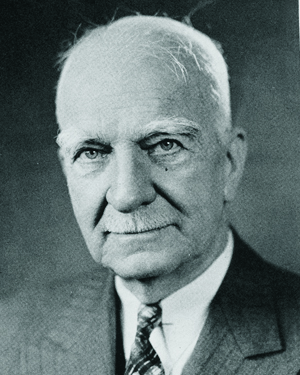
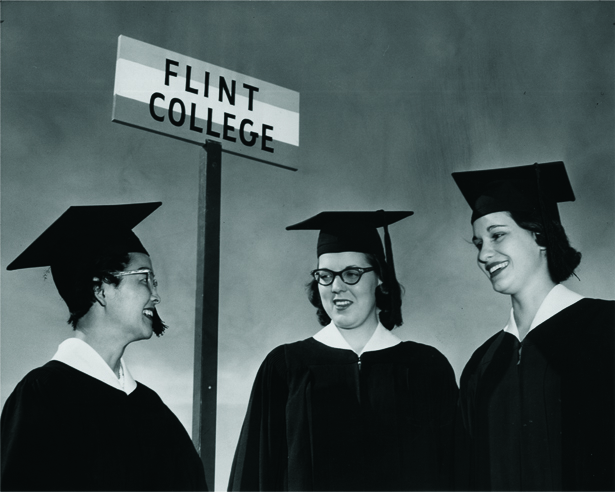
Also during the 1950s:
- February 1951 – Flint residents make a request to regents for the establishment of a four-year college in Flint.
- 1952–1954 – The U-M Flint College committee and the Flint Board of Education debate whether the college should be a four-year liberal arts college or a two-year senior college.
- January 1952 – U-M President Harlan H. Hatcher reports to the regents that he has named a committee to study the Flint College proposal.
- January 1955 – U-M President Hatcher and the regents accept the two-year senior college proposal.
- June 1956 – Patricia R. Mudge, valedictorian at Northern High School, and Edwin H. Gullekson, Jr., valedictorian at Central High School, are the first students to receive letters of acceptance.
- June 1956 – Fourteen full-time and four part-time instructors are hired to teach 28 courses in 13 subject areas.
- March 1959 – C.S. Mott donates a second gift of $1 million for the construction of a new library.
The 1960s
The fight for civil rights, Kennedy is assassinated, and one giant leap for mankind.
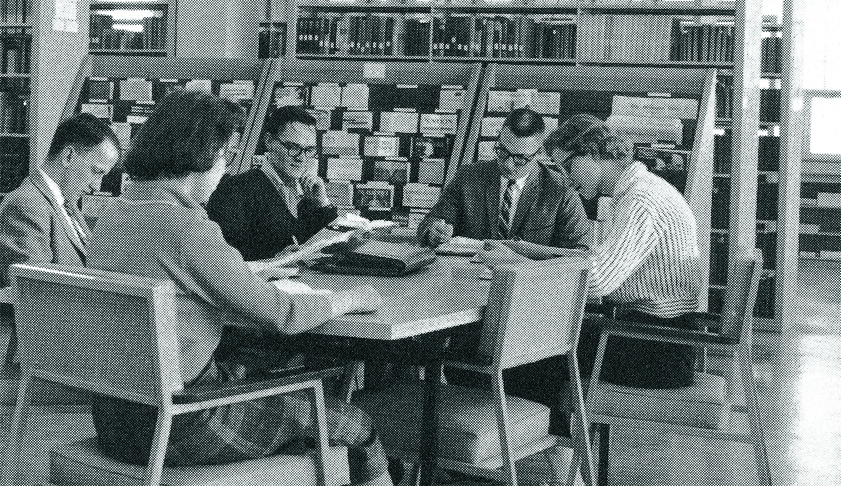
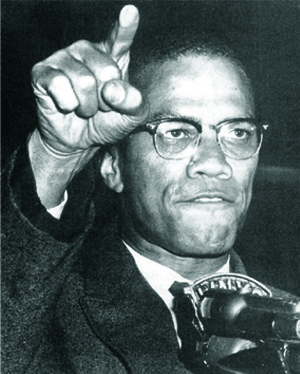
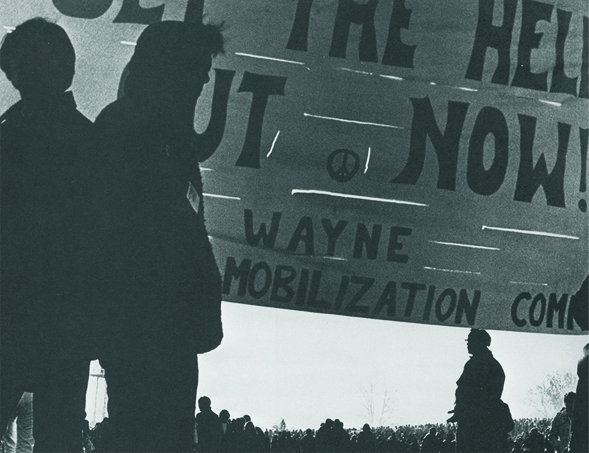
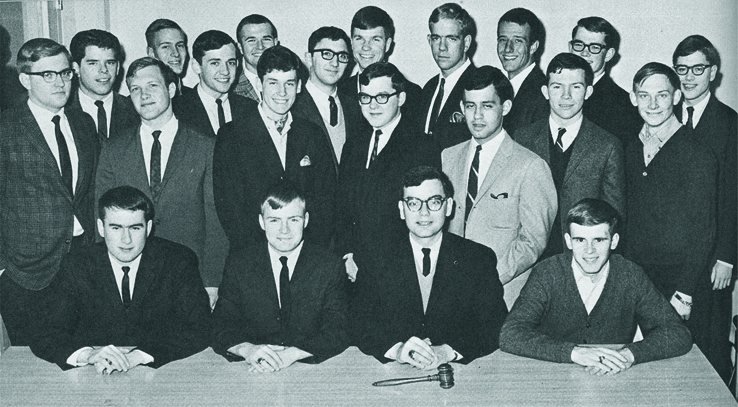
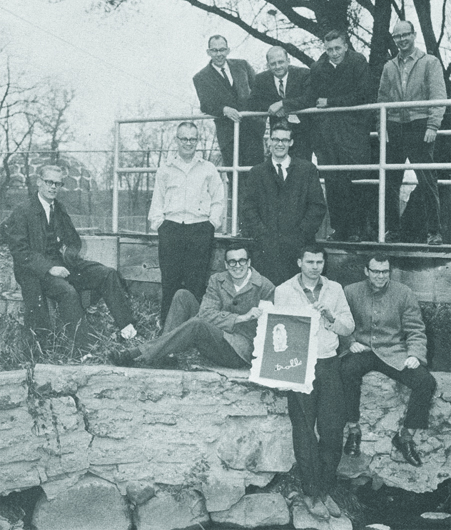
Also during the 1960s:
- November 1963 – Classes are cancelled after the assassination of President John F. Kennedy.
- 1963–64 – Studies are commissioned to examine the possibility of turning the Flint College of U of M into a four-year institution.
- March–July 1965 – The Michigan State Board of Education recommends a four-year college in Flint and the phasing out of U-M’s involvement. Public outcry and C.S. Mott threatening to withdraw millions in pledged support leads to state approval of a four-year University of Michigan college in Flint.
- July 1965 – Regents approve establishment of departments of English, foreign language and literature, history, education, business administration, biology, chemistry and physics. The first freshman class of 170 begins.
- 1966 – The Theatre Department is established.
- January 1968 – First mid-year commencements are held.
- April 1968 – The university closes the day Martin Luther King, Jr. is assassinated.
- 1969 – The Challenge Program is established.
The 1970s
The Vietnam War ends, Nixon resigns after Watergate, Hoffa disappears, and “May the Force be with you.”
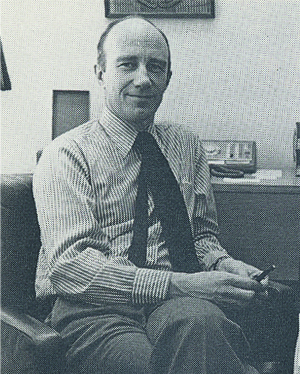
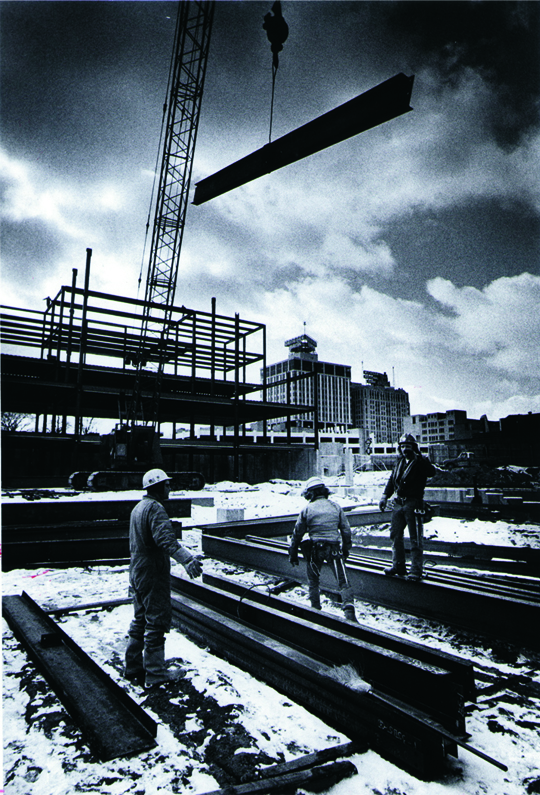
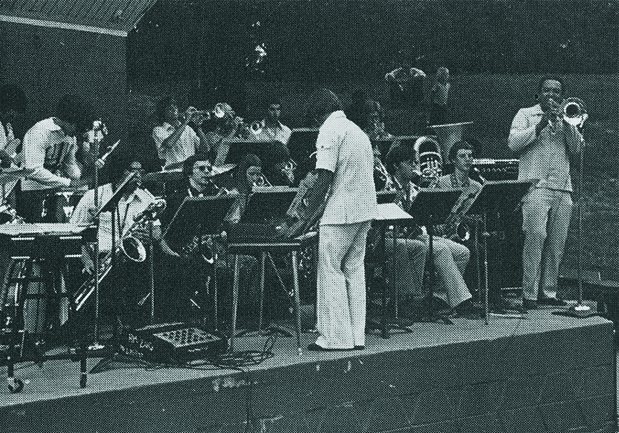
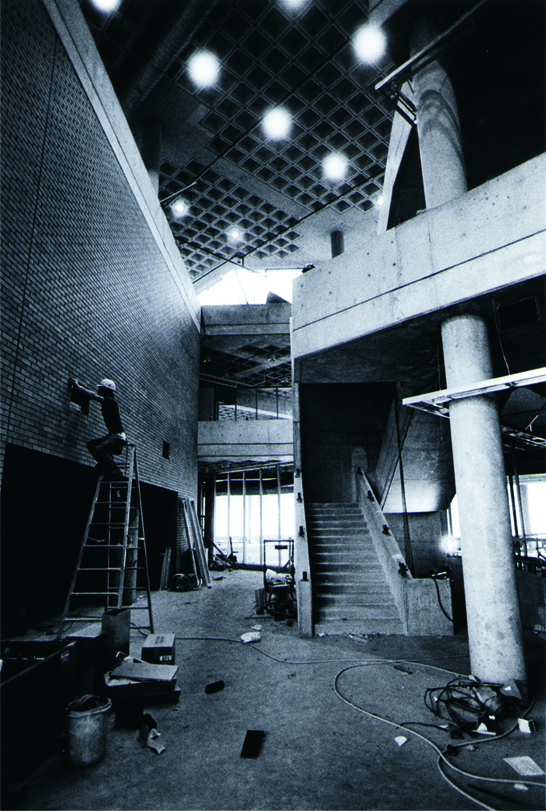
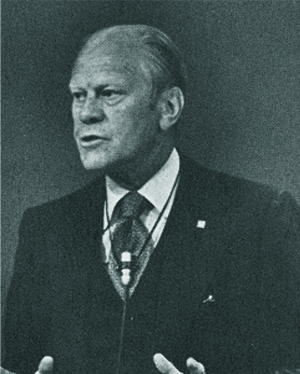
Also during the 1970s:
- Spring 1970 – North Central Association of Colleges and Secondary Schools grants accreditation to the Flint College of the University of Michigan.
- May 1970 – National Guard troops kill three Kent State students protesting the U.S. invasion of Cambodia, causing hundreds of colleges across the country, including Flint College of U-M, to close.
- April 1971 – Regents approve the name change to The University of Michigan-Flint.
- September 1972 – Sixteen temporary buildings are erected to ease campus overcrowding, pressuring the regents to move UM-Flint to its current riverfront location.
- February 1975 – College of Arts and Sciences and the School of Management are created.
- March 1977 – Classroom Office Building (CROB) is dedicated and UM-Flint’s library is moved to the fifth floor. University Center is dedicated.
- December 1977 – UM-Flint’s first graduate program, Master of Liberal Studies, is offered through the Rackham School of Graduate Studies.
- July 1978 – Gregory St. L. O’Brien is appointed as UM-Flint’s first provost.
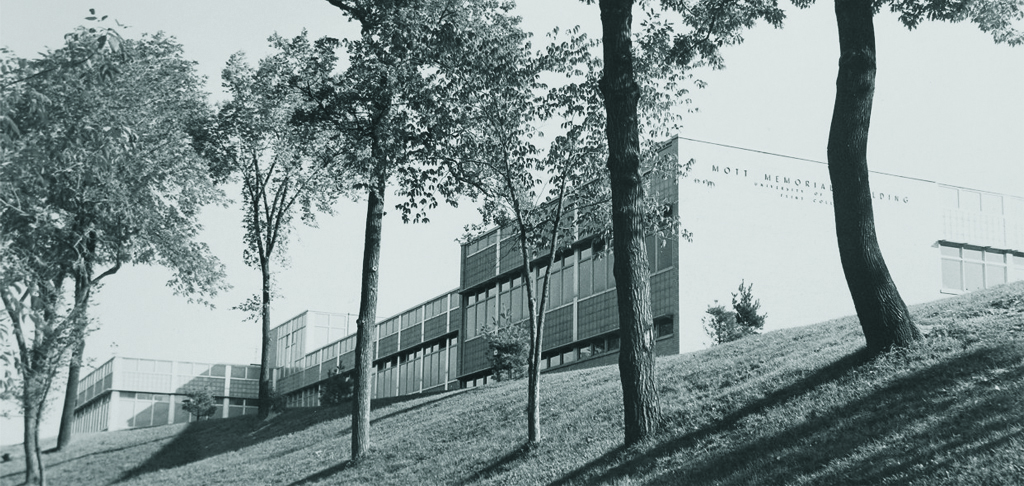
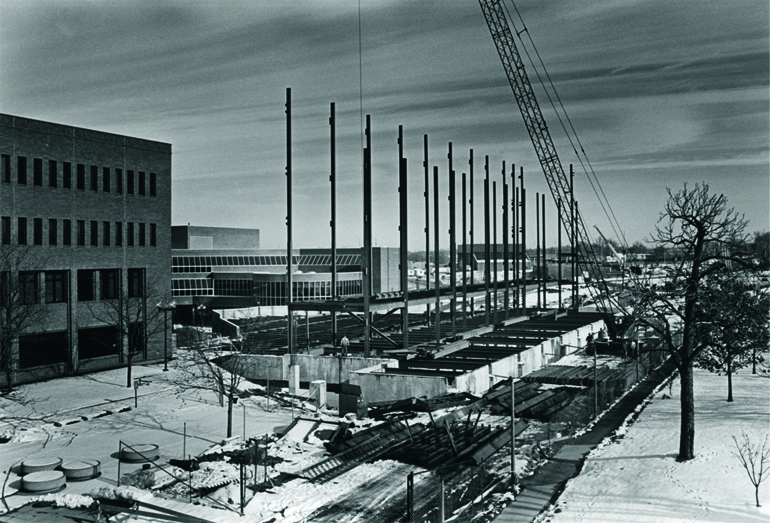
- July 1978 – UM-Flint accepts a $6 million grant from the C.S. Mott Foundation to build a physical education building, on condition it transfer ownership of the Mott Memorial Building to Mott Community College.
- Fall 1979 – UM-Flint Honors Program is created.
The 1980s
Ronald Reagan is inaugurated, Sally Ride’s into space, the Cold War ends, and “Who shot J.R.?”
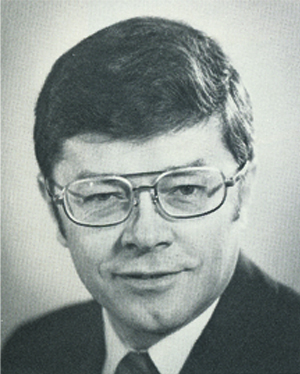
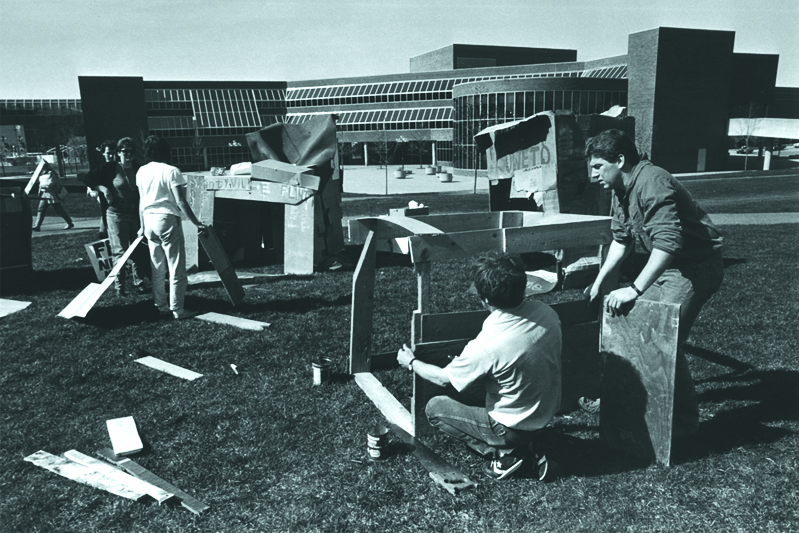
Also during the 1980s:
- January 1982 – U-M Physical Therapy program moves from Ann Arbor to Flint.
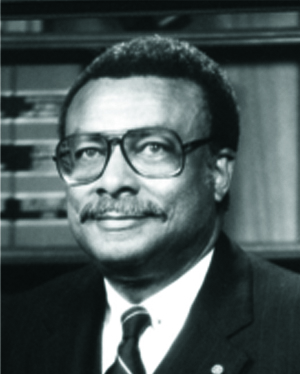
- May 1983 – Campus mourns the death of Chancellor Nelson, at the age of 50, from cancer.
- June 1987 – Alumnus Senator Donald W. Riegle, Jr. proposes UM-Flint annex the struggling AutoWorld.
- 1987 – The Office of Minority Affairs and the Office of Research are established.
- August 1988 – William R. Murchie Science Building opens, named for one of the founding faculty members of UM-Flint.
- 1988 – McKinnon Plaza is dedicated.
- Summer 1988 – UM-Flint moves the last of the programs from the Mott campus to the Riverfront campus.
- July 1989 – The School of Health Professions and Studies is established.
The 1990s
U.S. troops in Iraq, O.J. runs, the internet booms.
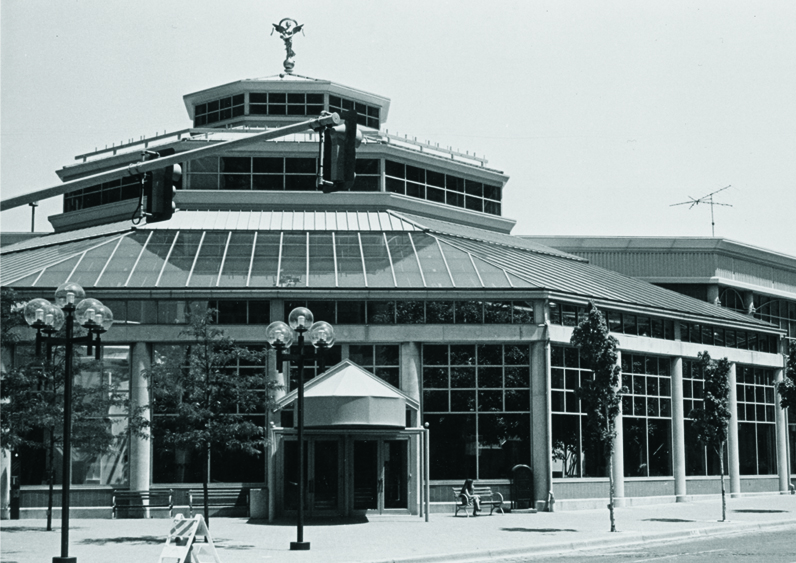
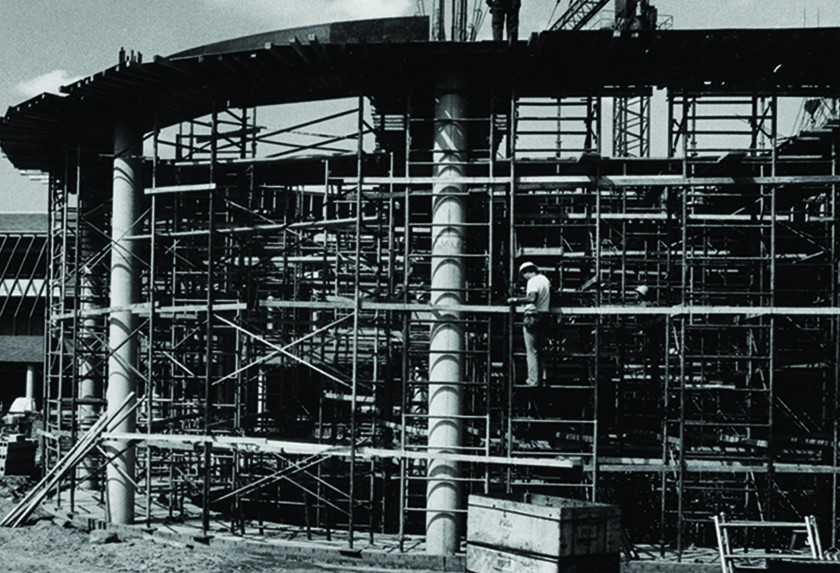
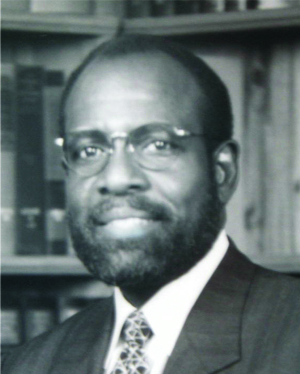
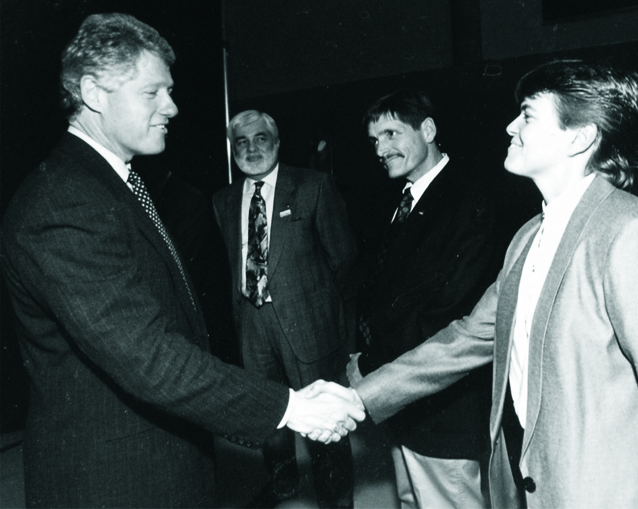
Also during the 1990s:
- April 1991 – UM-Flint approves a four-year Bachelor of Science in Nursing program in conjunction with Hurley Medical Center.
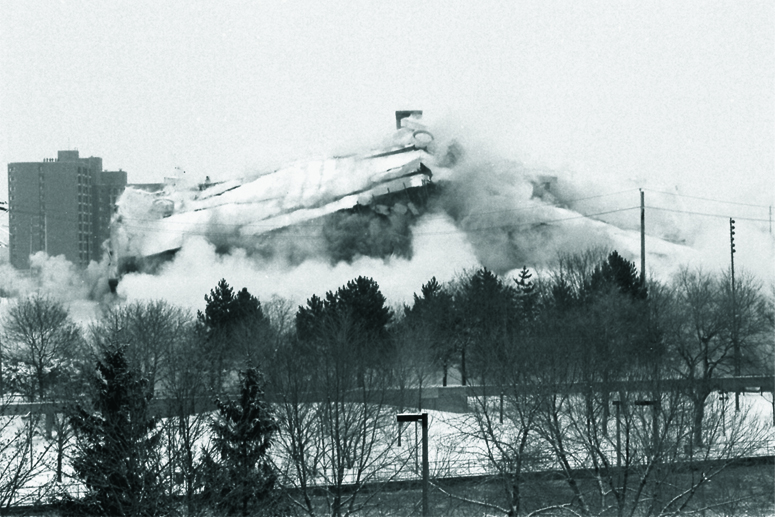
- November 1994 – William S. White announces an offer of $40 million to help UM-Flint acquire the AutoWorld property.
- December 1995 – Regents accept the AutoWorld property from the Flint Downtown Development Authority.
- March 1997 – Center for University Outreach is established with support from the Mott Foundation.
- December 1997 – School of Education and Human Services is created, the university’s fourth college.
- June 1998 – Regents authorize UM-Flint’s purchase of the Northbank Center on Saginaw Street.
The 2000s
Y2K, the second President Bush, U.S. stands united after 9/11, and Barack Obama is first Black president.
Also during the 2000s:
- July 2001 – Doctor of Physical Therapy degree established, UM-Flint’s first doctorate program.
- Fall 2001 – Women’s Educational Center opens.
- January 2005 – International Student Center opens.
- April 2005 – First Capital Campaign kicks off.
- February 2006 – UM-Flint unveils its Strategic Plan.
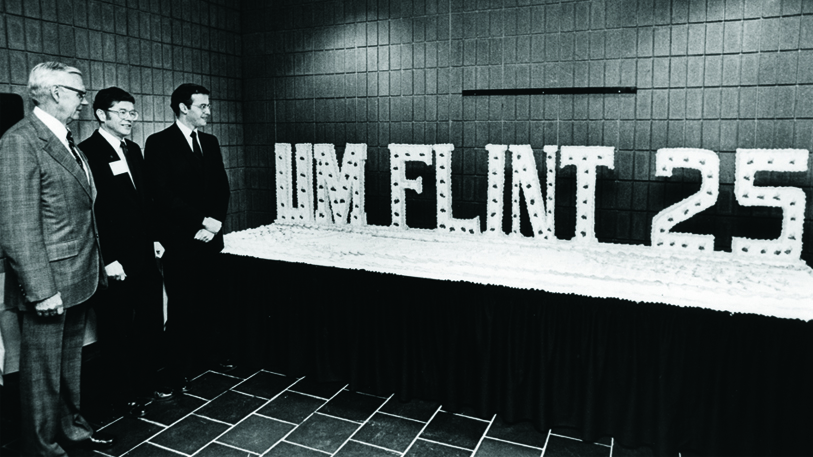
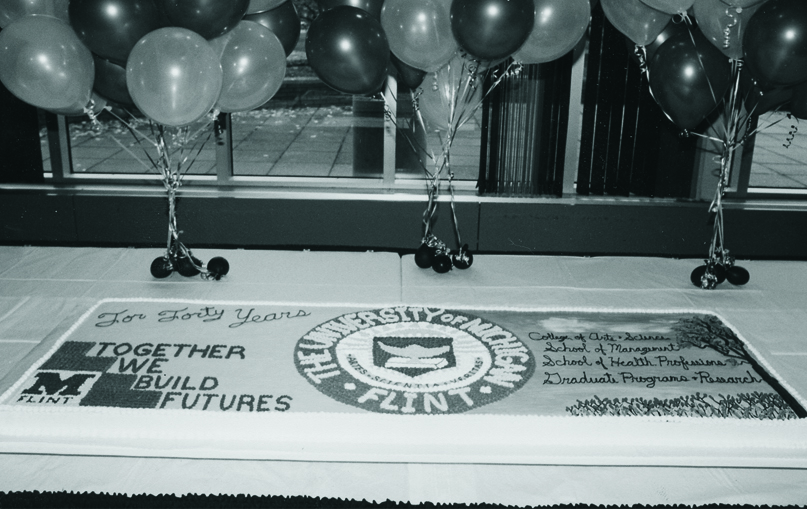
- September 2006 – UM-Flint celebrates its 50th anniversary!
A Tradition of Engagement
Throughout its history, UM-Flint has been defined not simply by its buildings, but by its commitment to engaged learning. Faculty combine teaching, research and community partnerships to address real-world challenges while preparing students to lead in their professions and communities. That dedication has earned national recognition, including the Carnegie Community Engagement Classification in both 2010 and 2019 and designation as Michigan Campus Compact’s inaugural Engaged Campus of the Year in 2012.
The 2010s
Hillary Clinton is first woman nominated for President, the fight continues for gay marriage and #blacklivesmatter, and social media rules.
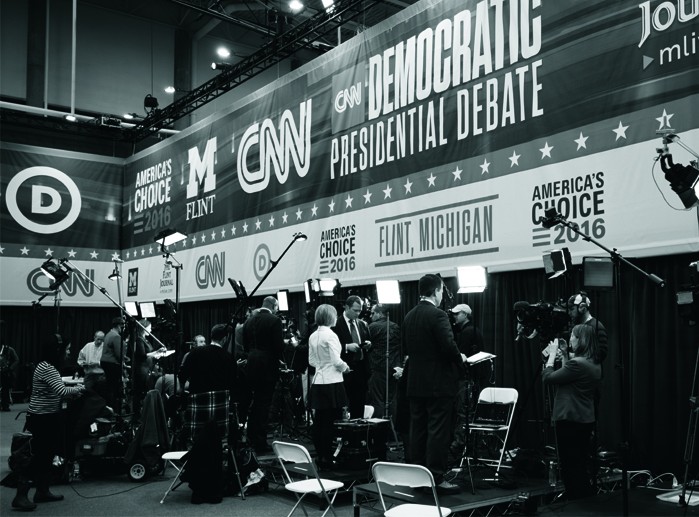
Also during the 2010s:
- Fall 2011 – UM-Flint unveils its 2011-2016 Strategic Plan.
- May 2011 – UM-Flint and Mott Community College partner to offer a new joint admissions program.
- June 2014 – UM-Flint and Grand Blanc Schools explore a new early college program.
- October 2014 – Intercultural Center opens on campus.
- October 2015 – UM-Flint plays a major role in community outreach efforts after the announcement of a public health emergency in the city of Flint due to high lead levels in the water. Victors for Michigan-Flint campaign launches with a $40 million goal.
- September 2016 – UM-Flint celebrates its 60th anniversary. University launches Safe Ride, a collaboration between Student Government and the Department of Public Safety that provides a free, safe transportation service on campus. UM-Flint creates the School of Nursing, the fifth school within the university.
- August 2016 – Campus-wide committee formed to develop a new 5-year strategic plan for the university.
- December 2017 – UM-Flint graduates its first PhD student, from the PhD in Physical Therapy program.
- May 2018 – School of Health Professions and Studies changes its name to the College of Health Sciences to better reflect its focus on both public health and health profession disciplines.
- October 2018 – UM-Flint breaks ground on a $39 million expansion to the William R. Murchie Science Building. College of Health Sciences adds a Physician Assistant Department.
- December 2018 – Victors for Michigan-Flint campaign raises over $57 million, the most successful capital campaign in the history of the university.
- January 2019 – Center for Gender and Sexuality is formed by merging the Women’s Educational Center and the Ellen Bommarito LGBTQ Center.
Momentum for Tomorrow
Today, the University of Michigan-Flint is entering one of the most dynamic periods in its history.
Its five academic units, the College of Arts, Sciences & Education, School of Management, College of Health Sciences, School of Nursing and College of Innovation & Technology, offer unique undergraduate, graduate and doctoral programs designed to meet the needs of today’s workforce. New academic partnerships have expanded experiential learning opportunities and nationally recognized academic programs continue to prepare graduates to make an impact across Michigan and beyond.
The university’s momentum extends well beyond the classroom. Recent years have brought record growth in sponsored research, attracting millions of dollars in external funding while expanding opportunities for faculty and students to tackle challenges ranging from health care and cybersecurity to education, digital inclusion and community well-being. Increasingly, research at UM-Flint is measured not only by scholarly discovery but by its impact on the people and communities it serves.
That spirit of partnership extends across the university. The Department of Public Safety has emerged as a national leader in community-centered public safety, working alongside faculty, local organizations, and residents to address challenges through education, outreach, and collaborative problem-solving. Innovative research partnerships have helped demonstrate how universities can strengthen trust, improve public safety and create healthier communities through evidence-based practices.
Combined with sustained enrollment growth, expanding academic offerings, and continued investment in transformational projects such as the Innovation & Technology Complex, these achievements reflect a university that continues to evolve while remaining firmly rooted in its founding mission.
The Next Chapter
Sarah Case imagined a University of Michigan campus in Flint nearly 120 years before the first students arrived. Seventy years after opening its doors, UM-Flint continues to honor that vision, not by standing still, but by adapting to the needs of each new generation. Through innovation, research, community partnership and an unwavering commitment to student success, the university remains focused on the same purpose that inspired its founding: expanding opportunity, strengthening communities and transforming lives.