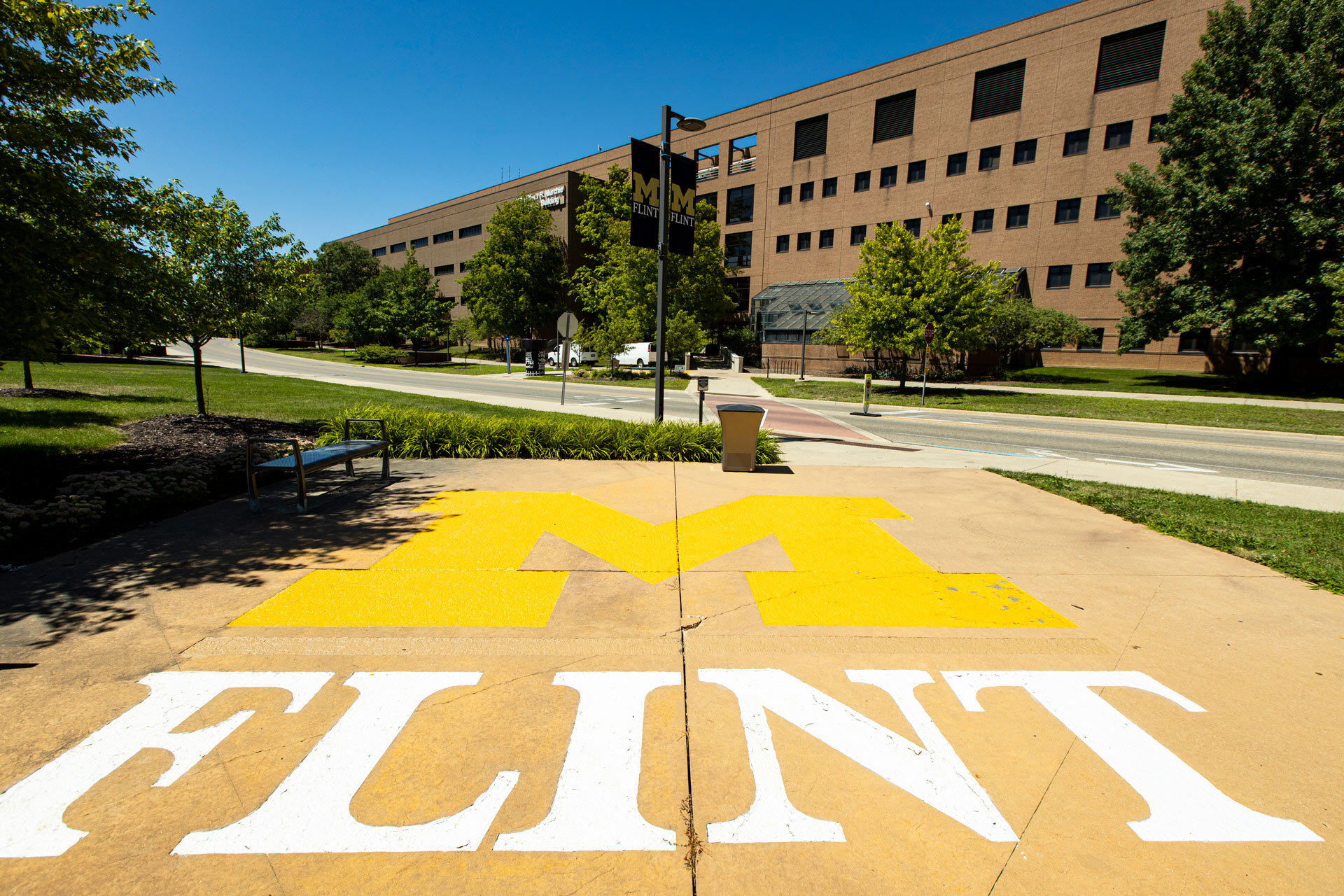
Sustainability Research Cluster
Advancing Interdisciplinary Solutions for Healthy Cities and Ecosystems
Welcome to the Urban Sustainability & Environmental Health Research Cluster at the University of Michigan-Flint. The cluster was created out of a growing need to bring researchers, practitioners, and students with an interest or expertise in urban health and environmental science together to address topics ranging from sustainable and connected communities to public health policy and resilient ecosystems. Considering that more than half of humanity now lives in cities, and ecological systems continue to be stressed, we believe that researchers from a myriad of disciplines are needed to promote planetary health. Therefore, the research group is interdisciplinary by design and has expertise in healthy cities, public health, urban planning and policy, interactive marketing, data science, geospatial technology, environmental management, urban design, graphic art and design, chemistry, engineering, sociology, psychology, and computer science.
Objectives
- Drive scientific research among UM-Flint researchers, and their domestic and international partners, on critical urban and environmental health issues
- Become a focal point for information exchange and cooperation among faculty, graduate students, practitioners, and community partners
- Foster applied research and engage policy issues to improve our understanding of the interfaces among urban-environmental-health systems
- To produce usable evidence, resulting from scientific publications and grant-funded projects, policy-makers can use to enhance the health of urban and natural areas
Current Research
We are developing a variety of interdisciplinary research proposals and have several projects within two main themes:
Ecosystem Management
Flint River Restoration
This project will evaluate current conditions in the Flint River in the City of Flint to support existing water quality improvement efforts intended by the Flint River Restoration Efforts.
Flint Drinking Water Assessment
Toxin monitoring in Flint drinking water. Evaluation of toxins in early embryonic development will ultimately be examined.
Urban Health Equity
Urban Foraging in Detroit
Urban agriculture is gaining some attention in cities throughout the world as a means to alleviate food insecurity, help restore ecosystems, and promote a deeper connection between nature and humans. Considering these, the goal of this project is to explore the physical and social neighborhood conditions which may support urban foraging behavior in Detroit, Michigan. The results of this study should assist practitioners with enacting policy to promote a forage-rich urban environment.
Members










Recent Publications, Presentations, & Grants
Publications
2021:
- Miehls, S., Dawson, H.A., Maguffee, A.C., Johnson, N.S., Jones, M.L., Dobiesz, N. (2021). Where you trap matters: implications for integrated sea lamprey management. Journal of Great Lakes Research, 47, S320-S327. https://doi.org/10.1016/j.jglr.2020.06.023.
- Dawson, H.A., Allison, M. (2021). Requirements for Autonomous Underwater Vehicles (AUVs) for scientific data collection in the Laurentian Great Lakes: a questionnaire survey. Journal of Great Lakes Research, 47, 259-265. https://doi.org/10.1016/j.jglr.2020.11.004.
- Dawson, H.A., Higgins-Weier, C.E., Steeves, T.B., Johnson, N.S. (2021). Estimating age and growth of invasive sea lamprey: a review of approaches and investigation of a new method. Journal of Great Lakes Research, 47, S570-S579. https://doi.org/10.1016/j.jglr.2020.06.002.
- Tonietto, O’Brien, L., Van Haitsma, C., Su, C., Blankertz, N., Mosiniak, H. G. S., Short, C., & Dawson, H. A. (2021). Toward a carbon neutral campus: a scalable approach to estimate carbon storage and biosequestration, an example from University of Michigan. International Journal of Sustainability in Higher Education, 22(5), 1108–1124. https://doi.org/10.1108/IJSHE-05-2020-0188.
- Rybarczyk. G. and R.R. Shaker. (2021) “Predicting bicycle-on-board transit choice in a university environment” Sustainability, 13(2): 512; https://doi.org/10.3390/su13020512
2020:
- Amini, R., Kawser, B. (2020): The impact of the interaction between mild and mild-to-moderate cognitive impairment with chronic health problems on hospital admission among community-dwelling older adults. Geriatrics & Gerontology International. doi: 10.1111/ggi.14070
- Dharia N., Gaydos B., and O’Brien M., “First Things First 2020,” Climate Designers, May 2020. https://www.firstthingsfirst2020.org/
- Groesbeck, F., Kodjebacheva, G., Walker, L., Campbell, K., Manuela-Abad, T., Tang, C. (2020). Use of health information technology in pediatric care in Genesee County, MI. Healthy Flint Research Coordinating Center Research Symposium.
- Katz, B., Turney, I., Lee, J.H., Amini, R., Ajrouch, K.J., Antonucci, T.C. (2020): Race/Ethnic Differences in Social Resources as Cognitive Risk and Protective Factors. Research in Human Development, 17:1, 57-77, DOI: 10.1080/15427609.2020.174380
- Martinez, T. and Tang, C. (2020). Design Implications for Health Technology to support LGBTQ+ Community: a literature review. The 14th EAI International Conference on Pervasive Computing Technologies for Healthcare (Online – COVID-19).
- Monear C. N., Xhabija B. “The effect of lead during the Flint water crisis on mouse embryonic stem cells self-renewal and differentiation markers”. 2020. In Vitro Toxicology, Mar;63.
- Rybarczyk, G., A. Ozbil, E. Andresen, and Z. Hayes. (2020) “Physiological responses to urban design during bicycling: A naturalistic investigation,” Transportation Research Part F: Psychology and Behaviour, 68: 79-93, https://doi.org/10.1016/j.trf.2019.12.001
- Walters, M., G.J. Roloff, J. Hartman, M. Donovan, C. Henry, E. Farinosi, M.D. Starking. 2020. Rethinking Northern Hardwood Forest Management Paradigms with Silvicultural Systems Research: Research–Management Partnerships Ensure Relevance and Application, Journal of Forestry
- Zhu, N. & Miller, N. S. (2020). Assessment system for Parkinson’s disease tremor and correlation analysis with applied signal processing algorithms. Journal of Engineering and Science in Medical Diagnostics and Therapy, 3(4), 1-8.
2019 and prior:
- S. W. Turner and S. Uludag, “Towards Smart Cities: Interaction and Synergy of the Smart Grid and Intelligent Transportation Systems,” in Smart Grid: Networking, Data Management and Business Models, CRC Press, 2016.
- M. Allison and S. W. Turner, “Designing a Community Aware Virtual Learning Infrastructure for STEM”, IEEE Integrated STEM Education Conference 2017 (ISEC ’17), (Princeton, New Jersey), March 2017.
- S. W. Turner and S. Uludag, “Intelligent Transportation as the Key Enabler of Smart Cities,” in IEEE/IFIP Network Operations and Management Symposium Workshop PASC 2016, (Istanbul, Turkey), April 2016.
- S. W. Turner, M. Allison, Z. Syed, and M. Farmer, “Towards a Flipped Cyber Classroom to Facilitate Active Learning Strategies”, the 2015 Frontiers in Education Conference (FIE 2015), El Paso, Texas, October 21-24, 2015.
- Morckel, V.C. & Terzano, K. (2019). Legacy city residents’ lack of trust in their governments: An examination of Flint, Michigan residents’ trust at the height of the water crisis. Journal of Urban Affairs, 41(5), 585-601. doi: 10.1080/07352166.2018.1499415
Presentations
- Rybarczyk, G. “Bicycle-on-board feasibility: A spatial investigation in Flint, Michigan.” Annual Association of American Geographers Meeting, February 25 – March 1, 2022
- Thelen, M. , Mazumder, F. , Zhu, L. , Miller, N. , Tang, C. , “Reliability Test of Mobile Embedded Accelerometers In Measuring Postural Stability for Individuals with Parkinson’s Disease”, ASME 2022 International Mechanical Engineering Congress & Exposition, Oct 30 – Nov 3, 2022
- Summers, C., Elkins, A. Konzer, C. Dawson, H.A.. Assessing Flint River ecology above and below a dam scheduled for removal. Oral presentation to the American Fisheries Society, Spokane, WA, August 2022
- Jeske, M., Dawson, H.A. Water Quality Evaluation and Comparison of Several Urban Michigan Rivers. Oral presentation to the American Fisheries Society, Spokane, WA, August 2022
- Dawson, H.A., Maguffee, A.C., Jones, M.L. A novel application of Management Strategy Evaluation to optimize management of an invasive parasitic fish in the Laurentian Great Lakes. Oral presentation to the American Fisheries Society, Spokane, WA, August 2022
- Summers, C., Elkins, A., Konzer, C., Dawson, H.A. Assessing the Ecology of the Flint River: Diversity of Species Above and Below a Century-Old Dam. Poster presentation to the Joint Aquatic Sciences Meeting, Grand Rapids, MI, May 2022
- Dawson, H.A., Higgins-Weier, C.E., Steeves, T.B., Johnson, N.S. Estimating age and growth of invasive sea lamprey: a review of approaches and investigation of a new method. Oral presentation to the Joint Aquatic Sciences Meeting, Grand Rapids, MI, May 2022
- Dawson, H.A., Maguffee, A.C., Jones, M.L. A novel application of Management Strategy Evaluation to optimize management of an invasive parasitic fish in the Laurentian Great Lakes. Oral presentation to the World Fisheries Congress, September 2021, Virtual
- Dawson, H.A., Allison, M. Requirements for AUVs for scientific data collection in the Laurentian Great Lakes: A questionnaire survey. Oral presentation to the International Association of Great Lakes Research, May 2021, Virtual
- Dawson, H.A. (2021). Assessment of environmental health and ecological function in and along the Flint River: A pre-restoration baseline. Michigan State University Quantitative Fisheries Center Meeting, Virtual
- Rybarczyk, G. “Assessing the potential for increasing intermodal transportation travel in a university town” Annual Association of American Geographers Meeting, April 7-11, 2021
- Zhu, L. , Miller, N. , Tang, C. , Pendyala, S. , Hanses, Q. , and Gladding, L. , “Reliability Check of an Assessment System for Parkinson’s Disease Tremor Monitoring with Portable Devices”, ASME 2021 International Mechanical Engineering Congress & Exposition, November 1 – 5, 2021.
- Rybarczyk, G. and S. Banerjee, “Coupling Twitter syntax with GIS operations: The benefits and costs of extending sentiment analysis to travel mode and geography.” #UMTweetCon2019, Ann Arbor, Michigan, May 23, 2019.
- Morckel, V. & Hanlon, B. (2019). The effects of the water crisis on housing and mobility in Flint, Michigan. American Association of Geographers Annual Meeting, Washington DC.
Grants
- Rybarczyk, G., Feng, F., “The e-bike boom: Examining key safety factors on e-bike potential to promote sustainability and equity in Detroit,” 2022, ($39,866), University of Michigan-Dearborn – University of Michigan-Flint Collaborative Research Grant, Role: PI
- 2022, Dawson, H.A., Xhabija, B. Use of fish biomarkers in urban vs. reference river systems in Michigan as a proxy of river health. Funded by Huron Mountain Wildlife Foundation. $4,990 to UM-Flint.
- 2022, Adams, J.V., Dawson, H.A., Allison, M., White, T., Anderson, J., Deng, Z.D., Wagner, C.M., Booth, R.M.W., Lowe, M.R., Symbal, M. Reconnaissance: tracking outmigration of sea lampreys as they seek their first host. Funded by the Great Lakes Fishery Commission, $993 to UM-Flint.
- 2021, Dawson, H.A., Jones, M.L., Symbal, M. Evaluation of lampricide treatment deployment strategies in an operating model of the control program to maximize reductions in sea lamprey abundance. Technical Assistance Project funded by the Great Lakes Fishery Commission, $5,549 to UM-Flint.
- Dawson, H.A. “Highlighting the health and distribution of the Flint River before and after dam removal,” 2020-2021, ($23,200) Saginaw Bay Watershed Initiative Network.
- Dawson, H.A. “Using inclusive practices to empower residents to engage with the Flint River,” 2020 ($11,951) W. K. Kellogg Foundation through a Flint Truth and Action Partnership Project Grant.
- Gaydos, B. “Investigating Coronavirus Vaccination Intentions Among Vulnerable Populations,” 2021, ($5,000) Edward Ginsberg Center, Ann Arbor.
- Gaydos, B. “Flint, for Wayfinding: Alternate Eco/nomic Commons,” 2019, ($10,000) EDA University Center for Community & Economic Development Research Fund.
- Rybarczyk, G., et. al. “Examining disparities in food access and enhancing the food security of underserved populations in Michigan,” 2012, ($4,000,000) USDA. Role: Co-PI
- Tonietto, R. “The Porch Project: Community building, neighborhood enhancements, and pollinator conservation in the Eastside Neighborhood of Flint,” 2018 ($20,000) UM-Flint Research and Creative Activity Award.
- Tonietto, R. “The Porch Project: Community building, neighborhood enhancements, and pollinator conservation in the Eastside Neighborhood of Flint,” 2019 ($9,408) W. K. Kellogg Foundation through a Flint Truth and Action Partnership Project Grant.
- Zhu, N., Miller N., and Tang C. “Using Body Worn Sensors to Measure Movement and Movement Feedback Following Exercise Interventions”, M-cube, University of Michigan, $60k, 2018-2021.
- Zhu, N. “Diagnose of Tinnitus-Related Neural Activities in the Brain Auditory Structures with Applied Signal Processing Technologies”, Research & Creative Activity and Bryer Fund, University of Michigan – Flint, $14,640, 2018-2019.
Network
- Michigan Department of Natural Resources
- U.S. Fish & Wildlife Service
- Detroit Zoological Society
- Michigan Department of Transportation
- Mass Transportation Authority
- Crim Fitness Foundation
- People and Place at Northumbria University
- The Porch Project
- Flint River Watershed Coalition
- City of Flint Planning Department
- Neighborhood Engagement Hub (Flint)
- Flint Institute of Art
- Buckham Gallery (Flint)
- Global Detroit
- King Ave Plus (Flint)
- McKenzie Patrice Croom Flint Community Lab
- Wade Trim
- Genesee County Parks
- U.S. Geological Survey
- Michigan State University Quantitative Fisheries Center
- Genesee County – Speak To Your Health
- Genesee Health Plan
- Chicago Park District
- Evergreen Community Development Initiative
- FreshWater Future
- Flint Development Center
- Detroit Advisory Council
- Genesee County Health Department
- Innovation Incubator (Flint)
- Michigan Parkinson’s Foundation
- League of Michigan Bicyclists