Research
The faculty of the College of Arts, Sciences & Education at UM-Flint is continuously engaged in innovative research in their respective fields.
Here is a directory of our ongoing research projects, along with updates on their activities, progress, and results.
Let’s Get Social:
Research that matters
Our faculty are engaged in ongoing research and exploration in their respective fields, and you can review their extensive research and publication activity in their faculty directories.
On this page:
Current Research Projects
Additive and Multiplicative Learning Progressions

Education Research Project
| Project Timeframe | 2024 – 2028 |
| Total Grant Amount | $1,689,167 |
| Grant Source | Institute of Education Sciences |
| Principal Investigator | Elizabeth Cunningham |
| Collaborators | Traci Shizu Kutaka, University of Virginia Caroline B. Ebby, University of Pennsylvania |
UM-Flint’s Cunningham takes the lead in exploring how to bridge the gap between what education researchers were learning about how students learn math and how teachers-in-training were being trained to teach the subject.
Beginning with a full assessment of UM-Flint’s elementary education coursework, the research team is following a group of about 25 elementary education students in their final two years of teaching and their first two years in the profession.
Cracks in the Pavement


Interdisciplinary Research Project
| Project Timeframe | 2025 – 2028 |
| Total Grant Amount | $495,000 |
| Grant Source | Mellon Foundation |
| Principal Investigator | Jacob Lederman |
| Collaborators | UM-Flint Departments of: Fine & Performing Arts; Language & Communication; Social Sciences & Humanities; Sociology, Anthropology & Criminal Justice |
The Cracks in the Pavement Grant was awarded by the Mellon Foundation to the University of Michigan-Flint in 2024. It enables us to examine how democratic cultures flourish in places like Flint, where communities creatively respond to challenges and reimagine democratic participation beyond traditional institutions.
We aim to explore how residents and organizations in our region are reimagining democratic participation beyond conventional forms of governance to foster new cultures of democracy.
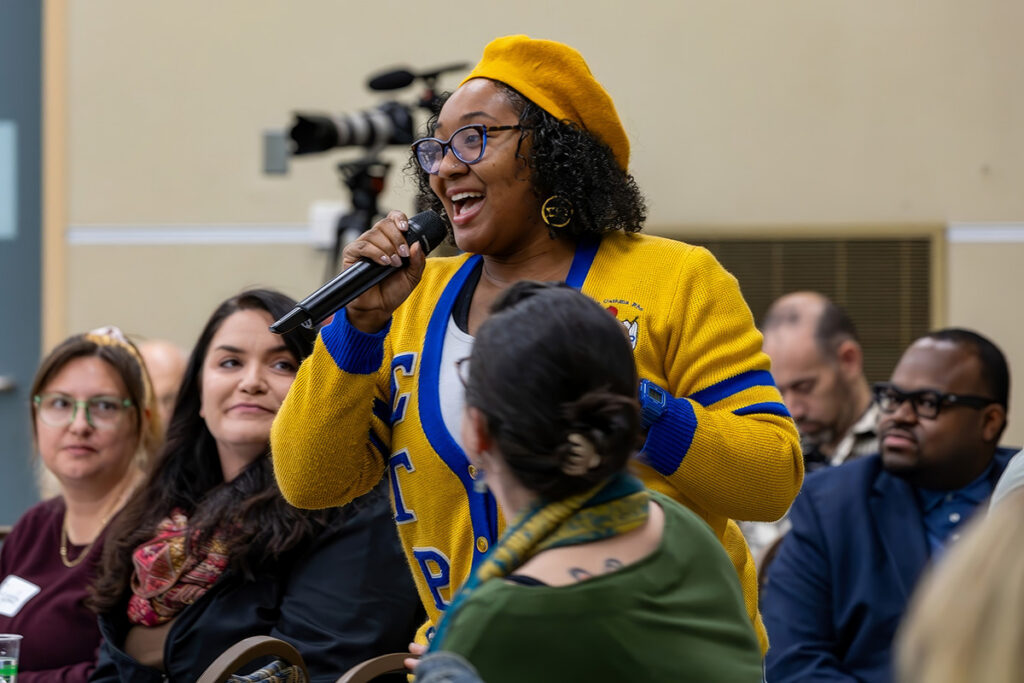
Activities related to the grant will take place during the academic years 2025-28 and were kicked off with a community-focused Symposium to exchange ideas, share experiences, and engage in collective creation.
Evaluation of Michigan’s Partnership Model

Education Research Project
| Project Timeframe | 2026 – 2029 |
| Total Grant Amount | $829,345.14 |
| Grant Sources | Michigan Department of Education |
| Principal Investigators | Jeremy Singer |
| Collaborators | Erica Harbatkin, Florida State University |
Michigan’s Partnership Model for school and district turnaround was designed to address persistent inequities in educational opportunity and outcomes by focusing on the state’s lowest-performing schools and the districts that serve them.
Partnership districts are disproportionately located in communities facing longstanding economic and social disadvantage, including higher rates of poverty, housing instability, and limited access to resources.
These districts also serve higher concentrations of students who have been historically underserved by the education system, including Black and Hispanic students and students from low-income households.
Prior analyses of Partnership districts have shown that these contextual factors are closely intertwined with educational challenges, including lower baseline achievement, higher rates of chronic absenteeism, and greater instability in staffing and leadership.
In response to these conditions, the Partnership Model reflects a more comprehensive, system-level approach to improvement than interventions focused primarily at the individual school level.
Central to the model is the development and implementation of three-year Partnership Agreements, which require districts to conduct needs assessments, identify root causes of underperformance, establish interim and long-term outcome goals, and implement coordinated strategies in collaboration with the Michigan Department of Education (MDE), Intermediate School Districts (ISDs), and other partners.
The model emphasizes not only accountability for outcomes, but also the development of district capacity, cross-sector partnerships, and data-driven decision-making processes to support sustained improvement. Prior evaluations of the Partnership Model documented both early signs of progress and substantial variation in implementation and outcomes across districts.
The purpose of this evaluation is to provide an independent, rigorous, and actionable assessment of Michigan’s Partnership Model that both builds on prior evaluation efforts and expands them to more directly support continuous improvement within MDE, the Office of Partnership Districts (OPD), and participating districts.
The study will examine the needs and contexts of Partnership districts and the alignment of the model to those needs; assess the implementation of Partnership Agreements and related supports, partnerships, and improvement processes; and analyze district and school outcomes and how they vary across implementation and contextual conditions.
The goal is to provide recommendations to strengthen the model’s design, supports, monitoring systems, partnerships, and long-term sustainability.
Global Flint Initiative
Interdisciplinary Research Project
| Project Timeframe | 2024 – ongoing |
| Total Grant Amount | $62,340 |
| Grant Sources | UM-Flint TCLT Community Engaged Fellows Grants ($5,000 and $2,040 respectively) Mott Community College Immigrant Student Success Mini-Grant ($5,000) UM-Flint RCA Award ($30,000) UM-Flint CASE Lynch Fund ($8,300) Engage Flint – with support from the Community Foundation of Greater Flint ($9,000 + $3,000 match from Community Foundation) |
| Principal Investigators | Jennifer Alvey Sasha Drummond-Lewis Emily Feuerherm |
| Collaborators | UM-Flint’s Departments of: Language & Communication; Sociology, Anthropology & Criminal Justice; International Center of Global Flint |
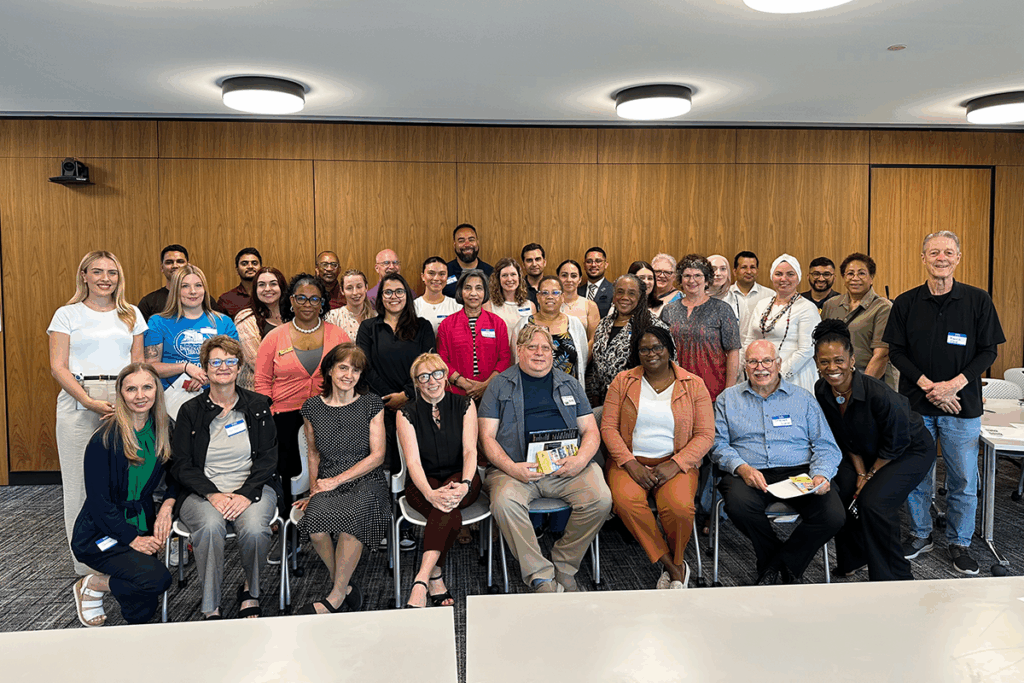
Beginning in March 2024, UM-Flint researchers joined forces with the International Center of Global Flint to support the group’s research needs related to a community-led development strategy focused on making Flint more welcoming and supportive of immigrants.
Current and future activities related to this research project include?
- Working with students in the Undergraduate Research Opportunity Program to analyze and write reports on the data that has been collected so far.
- Collaborating with two current students and one former student to develop an article for submission to a peer-reviewed journal
- Developing a presentation for a conference in Siena, Italy in March 2027
- Planning for next steps in our collaboration with ICGF and their GFI. The team will host three workshops in Winter 2027 to actively engage area constituents in data dissemination, shared learning, and SWOT analysis. Workshops will produce data and products that can be used to advocate for evidence-based programming that further advances welcoming community and civic engagement initiatives, connecting immigrants and native-born communities around shared commitments and interests.
Inclusive History Project: Blueprints of Power
Interdisciplinary Research Project
| Project Timeframe | 2019 – ongoing |
| Total Grant Amount | $42,000 |
| Grant Source | U-M Inclusive History Project |
| Principal Investigators | Callum Carr-Marquis Benjamin Gaydos |
| Collaborators | Catie Cunningham Megan Pellegrini Frances Willson Thompson Library Genesee Historical Collections Center |
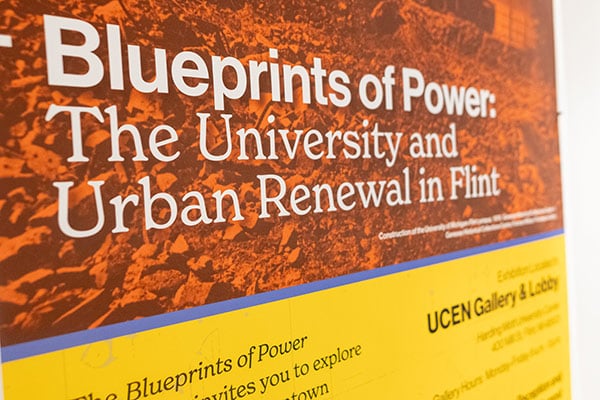
As part of the University of Michigan’s tri-campus Inclusive History Project, Carr-Marquis and Gaydos have conducted archival research on the university’s history and its connection to the 1970s Urban Renewal projects.
The research informed a mobile exhibition, developed in concert with UM-Flint students and alumni, which was on display at the UCEN and UPAV and will be part of an ongoing community engagement initiative.
STEM Education Programming in Flint
Interdisciplinary Research Project
| Project Timeframe | Ongoing |
| Total Grant Amount | $7,500 |
| Grant Source | U-M Phillip J. Bowman Center for Scholarship to Practice |
| Principal Investigators | E. Shirl Donaldson Jennifer LaCosse |
| Collaborators | UM-Flint’s Department of Sociology, Anthropology & Criminal Justice UM-Flint’s College of Innovation & Technology UM-Flint’s Office of Research |
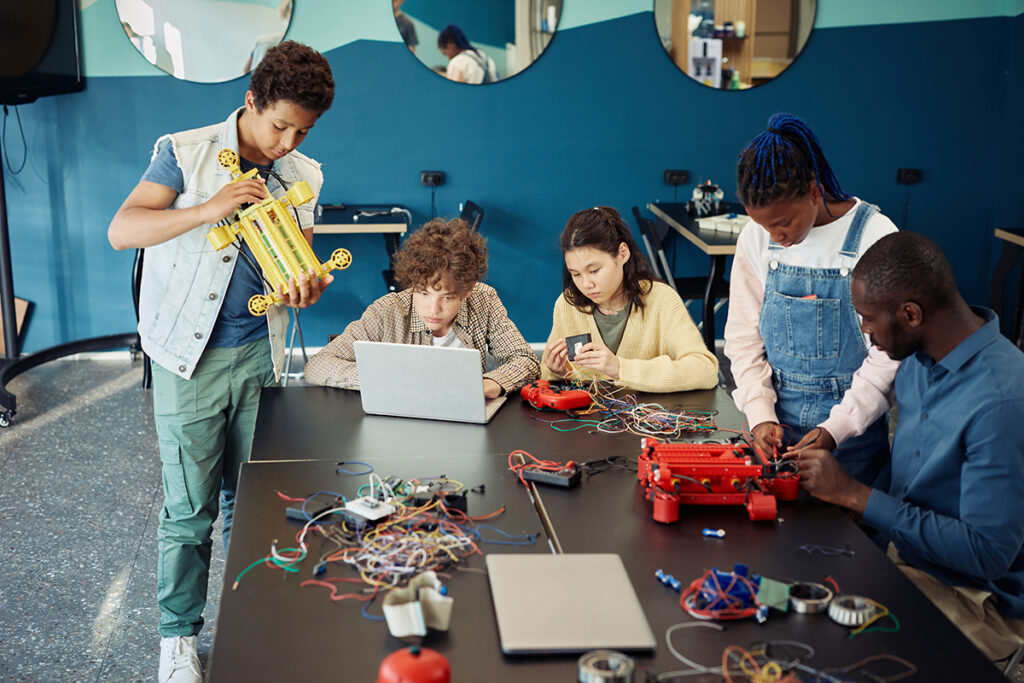
Donaldson and LaCosse are the latest researchers at UM-Flint working to co-create programming to help bridge the gap in exposure to and access to STEM education for Flint’s kids.
The team is engaged in a three-phase research approach, beginning with in-person focus groups to learn more about what Flint’s parents need to support their kids, then continuing with a qualitative survey exploring themes that emerged in the focus groups. Finally, the team plans to present their findings to the community as the basis for collaborative programming development.
Flint parents interested in participating in the second phase of the research survey can fill out an inquiry form to be contacted by the research team.
Completed Research Projects
Sharing Our Stories Through Dance

Fine & Performing Arts Research Project
| Project Timeframe | 2025 – 2026 |
| Total Grant Amount | $13,500 |
| Grant Source | U-M Arts Initiative |
| Principal Investigator | Emma Davis |
| Collaborators | UM-Flint Fine & Performing Arts Detroit Dance Collective Youth Arts: Unlocked |
During the 2025-26 school year, Dance instructor Emma Davis led a multi-pronged research project that engaged the professional dancers of Detroit Dance Collective, local incarcerated youth, and UM-Flint faculty and students to develop a collaborative choreographed dance performance, which was presented at three different times during the year.
While this research project is complete, the videos created as part of it will be submitted to gallery exhibitions and dance film showcases in the future.