Doctor of Occupational Therapy Degree
The OTD program can be finished in three years and provides excellent preparation for the National Board for Certification in Occupational Therapy exam.
Social:
Michigan’s First Accredited, Entry-Level Doctorate in Occupational Therapy
The University of Michigan-Flint is proud to offer the first entry-level Doctor of Occupational Therapy program in Michigan. As the highest level of academic preparation an entry-level occupational therapist can attain, the OTD program empowers our students to become among the most coveted graduates regionally and nationally.
UM-Flint’s entry-level Occupational Therapy doctorate program is designed for students who have completed their baccalaureate degree but have no previous clinical experience. Whether you are a recent college graduate or a working professional who wants to pursue a new career in occupational therapy, UM-Flint’s OTD program can equip you with the knowledge and skills you need to help patients with an injury or disability perform daily activities.
Accelerated Occupational Therapy Program
Earn your bachelor’s degree and OTD in six years, saving one year of time and tuition.
On this page:
Why Earn Your OTD Degree from UM-Flint?
A Doctorate That Prepares You to Lead
An entry-level doctoral degree in occupational therapy prepares graduates for leadership, program development, teaching, and scholarship within a rapidly evolving healthcare and education landscape. The doctoral capstone is a defining component of the OTD and provides advanced training in areas such as clinical innovation, education, advocacy, and research translation—experiences that extend beyond the scope of a master’s level program.
Clear and Affordable Path to a Doctoral Degree
The OTD program is designed to be completed in three years—comparable in length to many master’s programs in Michigan—while offering the added value of doctoral-level preparation. The program emphasizes affordability, with few additional course fees beyond tuition. Students also have opportunities to apply for paid graduate student research assistantships, gaining hands-on research experience while helping to reduce overall educational costs.
Doctoral Capstone Project
OTD students will complete a capstone experience and project in collaboration with clinical and community partners. The capstone project includes an in-depth experience in one or more of the following areas of focus:
- Administration
- Advocacy
- Clinical practice skills
- Education
- Leadership
- Program and policy development
- Research skills
- Theory development
Small Class Sizes and Accessible Faculty
Our program accepts 40 students each year. The small program size provides many opportunities for individual time with our expert faculty. You can learn from professional clinicians at the forefront of their fields. Your faculty are available to support, mentor, and guide you toward your professional goals throughout the program’s completion and beyond.
Learn by Doing
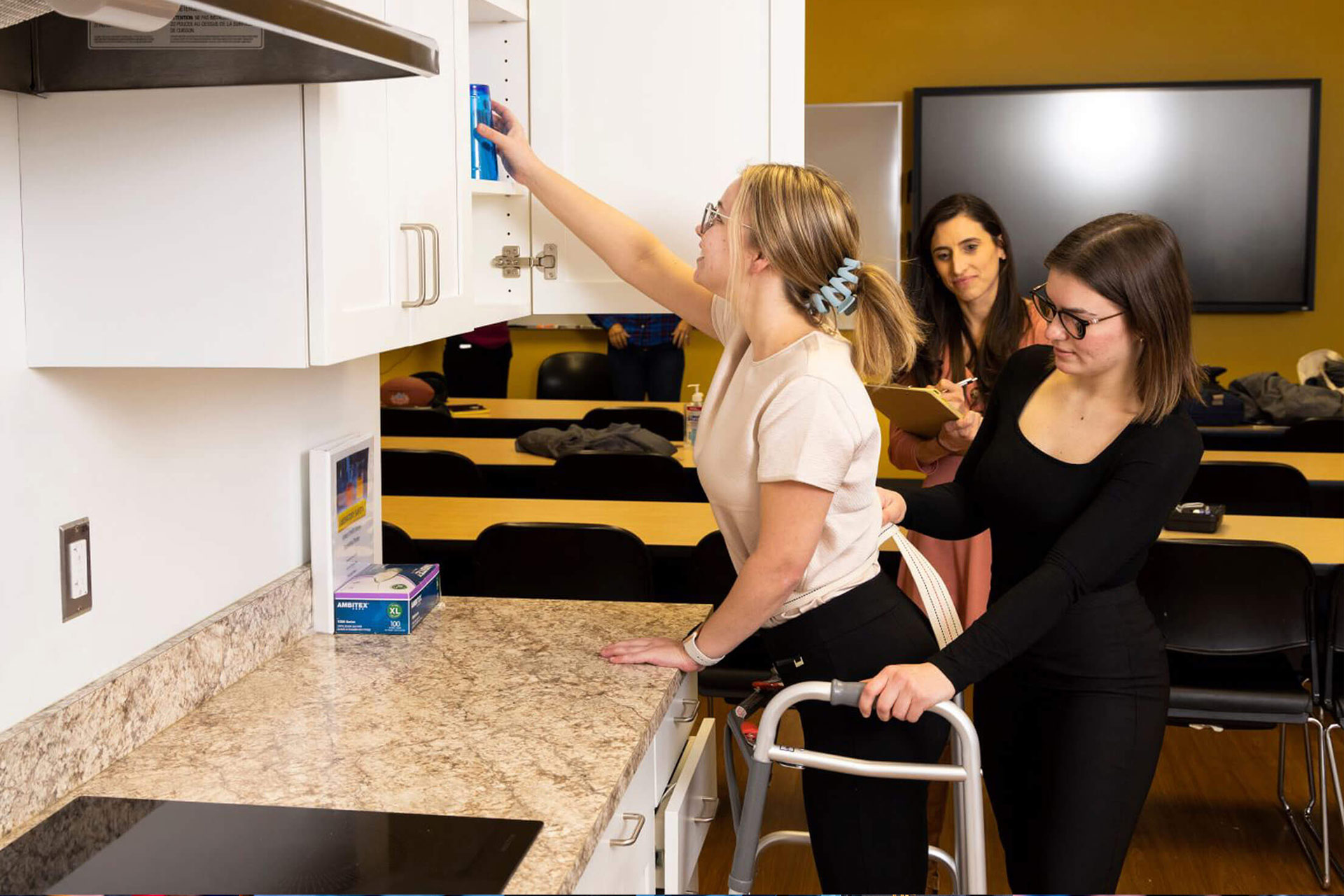
At UM-Flint, occupational therapy education extends far beyond the classroom. Throughout the OTD program, you will apply what you are learning through five fieldwork experiences, hands-on laboratory activities, community-engaged projects, service learning, and a doctoral capstone experience. These opportunities allow you to build your skills and confidence progressively while working with clients and communities across a variety of settings.
You will also have opportunities to provide occupational therapy services through HEART, UM-Flint’s student-run pro bono clinic, where students work alongside faculty and other health professions to serve members of the local community. Together, these experiences connect classroom learning with real-world practice and prepare you to enter the profession with meaningful experience working with clients, communities, and other professionals.
Learn With – and From – Other Health Professionals
As an OTD student at UM-Flint, you won’t learn occupational therapy in isolation. Our program is part of a collaborative health sciences environment that brings students and faculty from physical therapy, physician assistant, nursing, social work, respiratory therapy, public health, and other health disciplines together under one roof.
Throughout the curriculum, you will participate in interprofessional learning and simulation experiences designed to mirror the collaborative nature of today’s healthcare environment. You’ll have opportunities to work alongside students from other disciplines, learn about their roles and perspectives, and develop the communication, teamwork, and clinical decision-making skills needed to provide effective, patient-centered care as part of an interprofessional team.
The Michigan Advantage
Our program is the only OT program offered at any University of Michigan campus and is widely recognized as one of UM’s outstanding clinical programs, making our graduates highly desirable. Our connection with Michigan Medicine in Ann Arbor gives our students unique access and opportunities to network with highly skilled occupational therapy clinicians and researchers. Guest lectures, clinical placements, and workshops help our students build the strong skillsets they need to specialize in areas such as spinal cord injuries, stroke, amputations, lymphedema, hand therapy, complications of cancer treatment, and many more.
OTD/MBA Dual Degree
Encouraging interdisciplinary learning, UM-Flint provides a dual-degree option of OTD/MBA for students interested in starting their own private practice or business related to occupational therapy. The OTD/MBA dual degree curriculum allows OTD students to apply up to 12 specified credits toward both degrees. This arrangement helps you save big on tuition and expedites your timeline for completing two degrees.
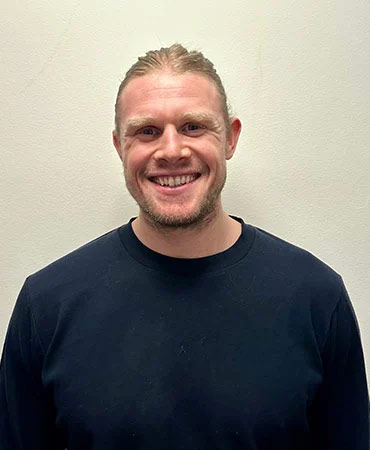
“The UM–Flint OTD program meant a great deal to me, both personally and professionally. Through diverse coursework and fieldwork experiences, I gained a strong foundation that prepared me for the fast-paced, collaborative environment of inpatient rehab and helped me grow in confidence as a clinician. The program also allowed me to explore different practice settings and discover areas of occupational therapy that genuinely excited me. I completed several demanding but fulfilling Level II fieldwork experiences and was able to pursue my dream capstone project. Throughout the program, I felt supported both in the classroom and during my clinical rotations. Just as meaningful as the experiences I had were the relationships I built with classmates and faculty, many of whom became close friends and mentors. The support, challenges, and experiences I had at UM–Flint helped shape the occupational therapist I am today and set me on a path toward a rewarding career. I’m still learning every day, but the UM–Flint OTD program helped lay the foundation for my career.”
Gunnar Lundteigen
Occupational Therapy 2023
Doctor of Occupational Therapy Program Curriculum
UM-Flint’s OTD program curriculum includes 110 credit hours of in-depth study, which can be completed in 9 semesters (three calendar years) on a full-time basis. The classes incorporate multiple learning styles in the traditional classroom, such as faculty and guest lectures, state-of-the-art lab work, and collaborative group activities.
Through the robust curriculum, students also obtain valuable fieldwork experiences through hands-on learning and a capstone project.
Career Outlook
With a doctorate degree in Occupational Therapy, you are qualified to pursue the highest-level career options in various health care settings
14%
Increase employment of occupational therapists.
$98,340
median annual wage for
occupational therapists
10,200
Openings for occupational therapists are projected each year over the decade.
NBCOT Exam
Graduates of the program are eligible to sit for the national certification examination for occupational therapists administered by the National Board for Certification in Occupational Therapy. After successful completion of this exam, the graduate can become an Occupational Therapist Registered. In addition, all states require licensure to practice; however, state licenses are usually based on the results of the NBCOT certification examination. A felony conviction may affect a graduate’s ability to sit for the examination or attain licensure status.
Accreditation
The entry-level occupational therapy doctoral degree program is accredited by the Accreditation Council for Occupational Therapy Education of the American Occupational Therapy Association, located at 7501 Wisconsin Avenue, Suite 510E Bethesda, MD 20814. ACOTE’s telephone number c/o AOTA is 301-652-6611.
IMPORTANT NOTICE: Completion of Level II Fieldwork (OTP 855 & 865) and Doctoral Capstone Project (OTP 795) must be done within 24 months of academic coursework following completion of the didactic portion of the program. All fieldwork, the Occupational Therapy Knowledge Exam, and preparatory activities must be completed before students can begin their 14-week (560 hours) Doctoral Residency. Residency placement must meet the specific objectives of the student’s capstone project. No more than 20% of the 560 hours can be completed outside of the mentored residency setting. Prior fieldwork or work experience cannot be substituted for the Doctoral Residency.
American Occupational Therapy Association
7501 Wisconsin Avenue, Suite 510E
Bethesda, MD 20814
Telephone: 301-652-6611
Estimated OTD Program Tuition and Fees
OTD Program Outcomes
The total number of graduates from the University of Michigan-Flint Doctorate of Occupational Therapy program during the three-year period 2023–25 was 52, with an overall graduation rate of 100%.
| Graduation Year | Students Entering | Students Who Withdrew for Reasons Other Than Academic Performance | Students Graduating | Graduation Rate* |
|---|---|---|---|---|
| 2023 | 24 | 0 | 24 | 100% |
| 2024 | 21 | 0 | 21 | 100% |
| 2025 | 8 | 1 | 7 | 100% |
| Total | 53 | 1 | 52 | 100% |
*The number of students who graduated according to the published program length. If a student does not graduate according to the published program length, the student should not be counted in any graduation rate.
National Board of Certification in Occupational Therapy School Performance Data
Prerequisite Courses
Applicants also must complete the following prerequisite courses at a regionally-accredited institution with a minimum GPA of 3.0 overall, a minimum GPA of 2.75 in science courses, and no grade lower than a C (2.0):
- Four credits in human anatomy with laboratory**
- Four credits in human physiology with laboratory**
- Nine credits in psychology (Introduction to Psychology, Developmental Psychology and Abnormal Psychology)
- Three credits in Introduction to Sociology or Introduction to Anthropology
- Three credits in statistics
- One credit in medical terminology (in a letter-graded course)
**If a 5-6 credit combination of anatomy and physiology classes is taken, the course content must be reviewed.
- Prerequisite courses should be completed within seven years of applying to the program; prerequisite courses taken more than seven years prior will be reviewed on a case-by-case basis.
- Domestic students are allowed to have coursework outstanding at the time of application. These prerequisites must be completed prior to program enrollment, if admitted. Students seeking an F-1 visa (international students) must have all prerequisite courses completed at the time they are offered admission.
- The science GPA is determined using all completed coursework in mathematics, natural sciences, and physics.
- Updated First Aid and CPR certification: CPR certification, including infant, child, and adult CPR with AED training for Healthcare Providers is required and should be through the American Heart Association class “First Aid” and “Basic Life Support for Healthcare Providers”. Certification will need to be updated for each year of the program.
- Observation hours are no longer required
- We encourage you to review your courses and determine which transfer by using the College of Health Sciences Prerequisite Courses Guide. This guide is intended as a starting point for prospective students. If you do not find your course(s) listed or need assistance, please reach out to the OTD program directly.
Admission Requirements
The OTD admissions process uses the Occupational Therapist Centralized Application Service centralized application service. The most competitive applicants demonstrate knowledge of the depth and breadth of the profession, as well as consistent academic performance, maturity, and values associated with health care professionals.
All applicants must have a bachelor’s degree from a regionally accredited institution with a minimum GPA of 3.0 overall.
Applicants admitted to the OTD program must demonstrate that they possess the attributes necessary to succeed in a challenging curriculum as well as perform in the practice of occupational therapy. Essential Functions are the cognitive, emotional, behavioral, and physical abilities required for satisfactory completion of the OTD curriculum and the development of professional attributes required of all students at graduation.
While an applicant is not required to disclose the specifics of any disability, it is the applicant’s responsibility to request a reasonable accommodation if they cannot demonstrate these Essential Functions without accommodation.
Application Deadlines
For the fall 2027 admission period, UM-Flint will use the Occupational Therapist Centralized Application Service. Application cycle opened July 16, 2026. Application deadline is June 4, 2027.
- Up to 40 students will be admitted once per year in the fall semester.
- The UM-Flint Occupational Therapy program operates on a rolling admission basis. We encourage you to apply early.
- The deadline to submit all your documents to OTCAS is June 4, 2027, to ensure full consideration of your application. It can take up to six weeks for OTCAS to send UM-Flint all of your documents after you have submitted them to OTCAS.
- If you do not submit all OTCAS materials to OTCAS by June 4, 2027, the materials may arrive at UM-Flint late and could take your application out of consideration.
- While June 4, 2027, is the application deadline, applicants have longer to be verified by OTCAS.
- We encourage you to apply early in order to meet the deadline for guaranteed consideration for scholarships, grants and assistantships
How to Apply to UM-Flint’s OTD Program
Submit the following to OTCAS by June 4, 2027*
- Official transcripts from all colleges and universities you have attended in the United States (foreign transcripts are to be sent to the Office of Graduate Programs, not OTCAS)
- Three professional letters of recommendation submitted to OTCAS
Submit the following directly to UM-Flint by June 4, 2027
- Transcripts and diplomas or certificates of graduation from any colleges and universities you have attended from outside the United States (do not send to OTCAS)
- For any degree completed at a non-U.S. institution, transcripts must be submitted for an internal credential review. Read International Transcript Evaluation for instructions on how to submit your transcripts for review.
- If English is not your native language, and you are not from an exempt country, you must demonstrate English proficiency.
- Students from abroad must submit additional documentation.
This program is an on-campus program with in-person courses. Admitted students can apply for a student (F-1) visa. Students living abroad are unable to complete this program online in their home country. If you currently hold a non-immigrant visa and are residing in the United States, please contact the Center for Global Engagement at globalflint@umich.edu for guidance regarding your eligibility.
The application process for the fall 2027 cohort includes an interview with OT faculty. Qualifying applicants will receive an invitation for this interview to be conducted via virtual meeting.
For questions about admissions requirements and the application process, contact otadmissions@umich.edu.
*We encourage you to apply by February 1, in order to meet the deadline for guaranteed consideration for scholarships, grants and assistantships
Occupational Therapy Non-Resident Graduate Tuition Scholarship
Covers up to 100% difference between residential and non-residential graduate tuition rates

Academic Advising & Visiting Campus
At UM-Flint, we are proud to have many dedicated advisors who are experts students can rely on to guide their educational journey. As an admitted student, you will be assigned an OTD faculty advisor. For academic advising prior to being admitted, please contact the OT Department at otadmissions@umich.edu.
Are you interested in visiting the UM-Flint campus and meeting with a current OTD student?